
Some links on our site may earn us a commission at no extra cost to you. Learn more.
The best all-around fireproof home safe for most households right now is the SentrySafe SFW123GTC: it carries a UL Classified 1-hour fire rating at 1,700°F, an ETL-verified water rating, and a 1.2-cubic-foot interior, at a price ($349) that doesn’t require a second mortgage. If you specifically need a longer fire rating and can spend more, the Honeywell 2605 is the strongest pick, with a UL Classified 2-hour rating at 1,850°F. Below we break down six real, currently sold fireproof home safes with verified specs, plus original cost math we haven’t seen published elsewhere.
Published July 25, 2026.
At a Glance: Our Fireproof Home Safe Picks for 2026
Every pick below is a real, currently sold model. Prices and ratings were checked in July 2026 and are subject to change without notice by the manufacturer or retailer.
| Award | Safe | Price | Verified Fire Rating | Water Rating |
|---|---|---|---|---|
| Best Overall | SentrySafe SFW123GTC | $349 | 60 min @ 1,700°F (UL Classified) | 8 in. submersion, 24 hrs (ETL Verified) |
| Best Fire Rating | Honeywell 2605 | $869.95 | 120 min @ 1,850°F (UL Classified) | Fully submerged, 8 hrs (manufacturer-stated) |
| Best Budget | First Alert 2030F | $89 | 30 min @ 1,550°F (UL-72 rated) | Waterproof seal (duration not published) |
| Best for Documents (Largest Capacity) | First Alert 2096DF | $499 | 60 min @ 1,700°F/927°C (UL Classified) | Waterproof seal, fully submerged (duration not published) |
| Best Biometric Lock | SentrySafe SFW123BTC | $495.99 | 60 min @ 1,700°F (UL Classified) | 8 in. submersion, 24 hrs (ETL Verified) |
| Best Value per Cubic Foot | Amazon Basics Fireproof and Waterproof Safe Box | $349.99 | 60 min @ 1,700°F (manufacturer-stated; no third-party certification listed) | 8 in. submersion, 24 hrs (manufacturer-stated) |
A fireproof safe is only one layer of protecting a home. If you haven’t covered the basics of entry-point security yet, our DIY home security starter setup guide is a good place to start before you get to a safe.
What Actually Makes a Home Safe a Fireproof Home Safe?
Strictly speaking, no consumer-grade safe is “fireproof” in the literal sense of being unaffected by fire. What the industry actually tests and certifies is fire resistance: how long the interior stays below a temperature that damages paper, plastic, or magnetic media while the outside of the safe is exposed to a much hotter flame. The standard most manufacturers cite is UL 72, administered by Underwriters Laboratories, which puts a safe in a furnace at a specified temperature for a specified time and checks whether the interior stayed under roughly 350°F (the scorch point for paper) with acceptable humidity. A safe that passes is “UL Classified” for that time and temperature — for example, “1 hour at 1,700°F.” Some safes instead cite ETL (Intertek) verification, which uses a comparable but separately administered test protocol, most often for water rather than fire claims.
This distinction matters when you’re shopping for a fireproof home safe, because marketing language is inconsistent. Some listings say “fireproof” while only meaning “fire-resistant for a specific, limited window.” Others clearly state a UL Classification with a named lab. Treat the named certification as the real spec and the word “fireproof” on the box as marketing shorthand — not a guarantee. Every model we cover below states its fire-resistance duration and temperature; where a listing did not clearly attribute the rating to UL, ETL, or another named testing body, we say so explicitly rather than assume it’s certified.
It’s also worth understanding what UL 72 actually protects. The most common paper-class tests keep the interior below roughly 350°F, which is the temperature at which paper begins to scorch and become unreadable — not the temperature at which electronics, film, or magnetic and flash storage media are safe. A safe with a strong paper-fire rating is not automatically an equally strong media-fire rating unless the manufacturer separately states one. If you’re storing hard drives, USB backups, or family photo negatives alongside documents, check whether the listing mentions a media class rating specifically, rather than assuming the headline fire rating covers everything you put inside.
How Long Does a Home Safe Actually Need to Survive a Fire?
Residential structure fires are typically brought under control by the local fire department in well under an hour from when it’s reported, but the safe itself may sit in a room that keeps burning or smoldering for longer, and interior temperatures can remain elevated well after flames are out. That’s why the two most common consumer ratings — 30 minutes and 60 minutes at roughly 1,550–1,700°F — cover the realistic window for most house fires, while a 2-hour rating (like the Honeywell 2605, UL Classified for 120 minutes at 1,850°F) is aimed at larger structures, longer response times in rural areas, or buyers who specifically want a bigger safety margin for irreplaceable documents.
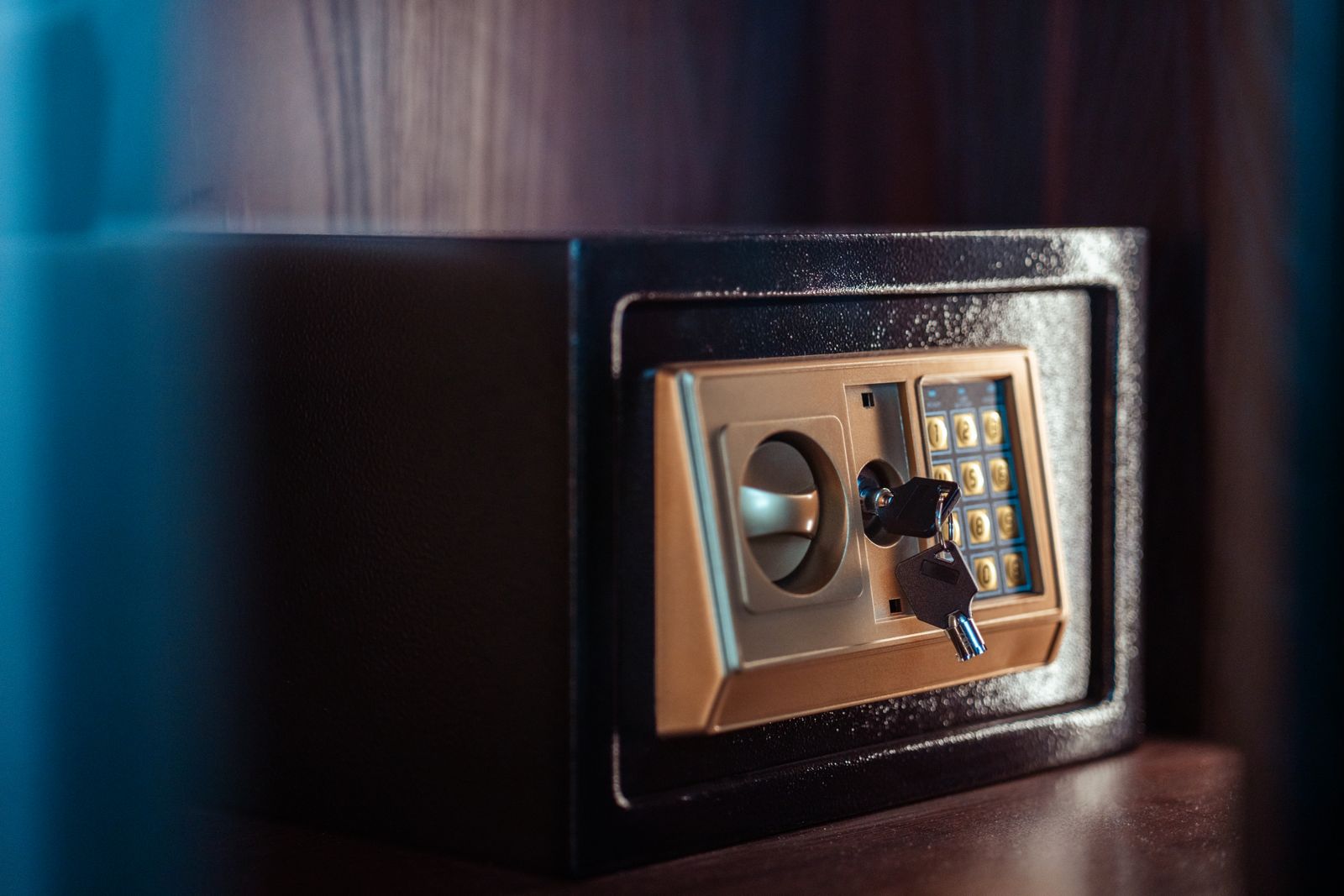
Among our picks, three models share a 60-minute rating at roughly 1,700°F: the SentrySafe SFW123GTC, the SentrySafe SFW123BTC, and the First Alert 2096DF, all UL Classified. The First Alert 2030F is rated for 30 minutes at 1,550°F under UL-72 — a real, verified rating, just a shorter window, appropriate for a smaller volume of documents rather than a full box of family paperwork. The Amazon Basics Fireproof and Waterproof Safe Box advertises the same 60-minute/1,700°F figure as the SentrySafe and First Alert models, but its own listing doesn’t name UL, ETL, or another testing lab behind that number — worth knowing if a verified third-party rating is a must-have for you rather than a nice-to-have.
None of this should be read as a guarantee. Manufacturer fire ratings describe a specific, tested scenario — a certain size, shape, and duration of exposure. A safe rated for 60 minutes is not rated for 90 minutes, and no rating accounts for a safe that’s been opened, damaged, or improperly placed. Follow the manufacturer’s guidance on placement and duration limits rather than assuming any rating extends further than what’s printed on the spec sheet.
Do You Need a Waterproof Safe Too?
Yes, in most cases — and this is an easy thing to miss when shopping on fire rating alone. Firefighters routinely use significant amounts of water to knock down a structure fire, meaning a safe that survives the heat can still lose its contents to water damage minutes later if it isn’t also sealed against moisture. This is why most of the well-reviewed document safes on the market today pair a fire rating with a separate water rating, usually expressed as a depth of submersion and a duration (for example, “8 inches for 24 hours”).
Both SentrySafe models here (the SFW123GTC and the biometric SFW123BTC) carry an ETL-verified rating of 8 inches of submersion for up to 24 hours — a specific, named, third-party-verified figure. The Honeywell 2605 states it’s waterproof when fully submerged for up to 8 hours, and the First Alert models describe a “waterproof seal” that keeps contents dry when submerged without publishing an exact depth or duration figure. The Amazon Basics safe advertises the same 8-inch/24-hour figure as the SentrySafe units, but again, without naming an independent testing body behind it. If you live somewhere prone to basement flooding, burst pipes, or you simply want the extra peace of mind, prioritize a model with a named, verifiable water certification rather than an unqualified “waterproof” claim.
Residential fire sprinkler systems, where installed, and hand-held fire hoses both add substantial water exposure on top of the heat itself, which is exactly the scenario a stated depth-and-duration water rating is meant to address. A safe with only a fire rating and no water rating at all can still take on water damage even if the interior never gets hot enough to scorch paper. When a listing doesn’t specify a water rating, it’s reasonable to assume it hasn’t been tested for that scenario, rather than assuming it’s covered by default.
Is a Bigger Safe Always Safer?
Not necessarily — capacity, weight, and theft resistance pull in different directions, and it’s worth being deliberate about which one matters most for what you’re storing. The First Alert 2096DF is the roomiest option here at 2.1 cubic feet, enough for hanging file folders, a small stack of binders, and valuables side by side, which makes it a solid pick if your main goal is organizing physical documents rather than just protecting a passport and a few heirlooms. The Amazon Basics Fireproof and Waterproof Safe Box is close behind at 2.13 cubic feet.
Here’s the dealbreaker to watch for: a small, light safe is easier to live with, but it’s also easier for a burglar to simply carry out the front door. The First Alert 2030F, for instance, is a compact 0.39-cubic-foot chest-style safe designed to be portable, with a carry-friendly form factor and no bolt-down hardware mentioned in its published specs. That’s a reasonable trade-off for a “grab it in an evacuation” document box, but it is not a substitute for a bolted-down safe if your goal is deterring theft — a safe that can be picked up and carried away protects you from fire, not from a burglary. The larger, heavier models (Honeywell 2605 at 113 lbs, SentrySafe models around 86 lbs) are harder to move quickly, and several — including both SentrySafe models — ship with pre-drilled mounting holes and bolt-down hardware specifically so they can be anchored to a floor or shelf. If theft resistance matters to you as much as fire protection, follow the manufacturer’s bolt-down instructions; an unsecured safe of any size and rating is meaningfully easier to remove from a house.
Digital Keypad, Key, or Biometric — Which Lock Should You Choose?
Lock type is a genuine feature decision, not just a preference. A physical key lock, like the one on the First Alert 2030F, is simple and doesn’t depend on batteries, but a lost key means you’re locked out (or need a locksmith), and a hidden spare key is only as secure as its hiding spot. A digital keypad — used on the SentrySafe SFW123GTC, the Honeywell 2605, the First Alert 2096DF, and the Amazon Basics safe box — adds a programmable code and typically a backup key, which is a reasonable middle ground for most households, though it does rely on a battery that should be checked periodically.
The SentrySafe SFW123BTC adds a fingerprint reader on top of a digital keypad backup, which is genuinely convenient for quick access and avoids the “what’s the code again” problem — but a biometric lock is a nice-to-have layered on top of the must-have fire and water ratings, not a replacement for them. Treat fire rating, water rating, and build quality as the must-have criteria for any fireproof home safe, and treat lock type, interior lighting, and shelving as nice-to-have differentiators once the must-haves are covered.
Which Safe Gives You the Most Verified Fire Protection for Your Money?
Here’s an original comparison we built specifically for this guide: rather than just listing price and capacity separately, we calculated cost per cubic inch of fire-rated interior space, and UL/ETL-verified fire-resistance minutes per dollar spent, for each safe below. This gives a more apples-to-apples sense of what you’re actually paying for.
| Safe | Price | Interior Capacity | Verified Fire Rating | Cost per Cubic Inch | Fire-Rated Minutes per Dollar |
|---|---|---|---|---|---|
| First Alert 2030F | $89 | 0.39 cu ft (674 cu in) | 30 min (UL-72) | $0.13 | 0.34 |
| SentrySafe SFW123GTC | $349 | 1.20 cu ft (2,074 cu in) | 60 min (UL Classified) | $0.17 | 0.17 |
| First Alert 2096DF | $499 | 2.10 cu ft (3,629 cu in) | 60 min (UL Classified) | $0.14 | 0.12 |
| SentrySafe SFW123BTC | $495.99 | 1.20 cu ft (2,074 cu in) | 60 min (UL Classified) | $0.24 | 0.12 |
| Honeywell 2605 | $869.95 | 0.90 cu ft (1,555 cu in) | 120 min (UL Classified) | $0.56 | 0.14 |
| Amazon Basics Safe Box* | $349.99 | 2.13 cu ft (3,681 cu in) | 60 min (manufacturer-stated) | $0.10 | 0.17* |
*The Amazon Basics figure is starred because its 60-minute rating isn’t attributed to a named testing lab in the manufacturer’s listing, unlike the other five models, which all cite UL or ETL by name. Treated only among the verified-certification models, the First Alert 2030F delivers the most UL-verified fire-resistance minutes per dollar, largely because it’s small and inexpensive — a reminder that “best value” and “best for a family’s full document archive” aren’t the same question. The Honeywell 2605 costs the most per cubic inch by a wide margin, which is the direct trade-off for doubling the fire-resistance window to two hours. The SentrySafe SFW123GTC lands in the middle on every measure, which is a large part of why it’s our Best Overall pick.
Where Should You Put a Home Safe, and Does Placement Matter as Much as the Safe Itself?
Placement and installation affect real-world performance as much as the spec sheet does, so this is a case where following the manufacturer’s instructions matters more than any single feature comparison. Manufacturers that include bolt-down hardware — as SentrySafe and several First Alert models do — specify particular mounting surfaces and hardware for a reason, and skipping that step leaves an otherwise well-rated safe exposed to simple removal. Interior or ground-floor closets, rather than exterior walls or attics, are generally recommended by manufacturers because they’re less exposed to direct flame and to extreme temperature swings, though you should always check your specific model’s placement guidance rather than assume one location works for every safe.
Weight distribution is another placement detail that’s easy to overlook. A heavier safe, like the 113-lb Honeywell 2605, needs a floor structure rated to support that concentrated weight, especially on an upper story — check with the manufacturer or a contractor if you’re unsure, rather than assuming any floor can hold it. Garages and attics are common default choices simply because they have open floor space, but both experience wider temperature swings than an interior closet, which is a reason several manufacturers specifically recommend against them for long-term document storage.
We’re not going to claim any safe on this list “guarantees” your documents will survive a fire, and you should be skeptical of any source that does. A fire-resistance rating describes performance under a specific, controlled test — real fires vary in intensity, duration, and how directly they expose the safe. Following the specific fire and water rating limits printed by the manufacturer, and bolting the safe down per its installation instructions, are the two most important things you control. Pairing a bolted-down safe with basic entry-point monitoring — the kind of setup we walk through in our Ring Video Doorbell review — adds a layer of theft deterrence that a safe alone doesn’t provide. For a broader look at hardware in this category, see our hardware and smart security picks for 2026 or browse the full Hardware & Smart Security category.
How We Researched These Fireproof Home Safes
We did not physically test these safes ourselves. Our process was a desk-research methodology: we cross-referenced each manufacturer’s published specification sheets and retailer listings for fire rating, water rating, capacity, lock type, and price; prioritized ratings that named a specific certifying body (UL or ETL) over unattributed marketing language; and looked for patterns in verified owner feedback and long-term reliability discussion (recurring complaints about battery life, lock failures, or hinge wear, for example) rather than relying on a single review. Where a listing did not clearly state a certification body for a rating, we noted that explicitly rather than assume it was certified. Pricing reflects what we found at the time of research and will change over time. For more on how we approach reviews across the site, see our editorial standards.
Frequently Asked Questions
What does a “UL 72” or “UL Classified” rating actually mean for a home safe?
UL 72 is the fire-resistance test standard administered by Underwriters Laboratories. A safe that’s “UL Classified” for a stated time and temperature (for example, 1 hour at 1,700°F) was placed in a furnace at that temperature for that duration and kept its interior below the temperature and humidity threshold that damages paper. It’s a real, independently verified test, not just marketing language — but it only certifies the specific time and temperature listed, not performance beyond that window.
Is a fireproof safe the same thing as a waterproof safe?
No. Fire resistance and water resistance are tested and rated separately, and a safe can have one without the other. Since firefighting itself involves large amounts of water, we recommend prioritizing a safe with both a named fire rating and a named water rating (ideally with a stated depth and duration, like “8 inches for 24 hours”) rather than assuming a fireproof safe is automatically waterproof.
Do I need to bolt my home safe to the floor?
If theft resistance matters to you, yes. Many of the safes here, including the SentrySafe models, ship with pre-drilled holes and bolt-down hardware specifically so the safe can be anchored to a floor or shelf. Follow the manufacturer’s specific mounting instructions for your model and surface; an unsecured safe, regardless of its fire rating, can simply be carried out of the house.
Can a biometric fingerprint safe be trusted for long-term use?
Biometric locks, like the one on the SentrySafe SFW123BTC, are a convenience feature layered on top of a digital keypad backup, not a replacement for it. We’d treat the fire rating and water rating as the must-have decision factors and lock type, including biometric access, as a nice-to-have — useful, but secondary to whether the safe is actually UL Classified and ETL verified for fire and water protection.
How much should I expect to pay for a legitimately fire-rated home safe?
Based on the models in this guide, a compact, UL-rated document safe starts around $89 (First Alert 2030F), a mid-size UL Classified fire-and-water safe with a digital keypad runs roughly $350–$500 (SentrySafe SFW123GTC, SentrySafe SFW123BTC, First Alert 2096DF, Amazon Basics Safe Box), and a longer 2-hour UL Classified rating, like the Honeywell 2605, costs closer to $870. Prices change frequently, so treat these as a general range rather than fixed figures.
Will a fireproof safe protect a laptop, external hard drive, or USB drive?
Not necessarily to the same standard as paper documents. The roughly 350°F interior threshold used in most UL 72 paper-fire tests is still hot enough to damage electronics and magnetic or flash storage media. Some manufacturers sell separate media-rated safes or fireproof document/media bags rated to a lower interior temperature specifically for digital storage; check your specific safe’s published media rating rather than assuming a standard paper-rated safe will protect a hard drive for the same duration.
Published July 25, 2026. Diversify Media.
