
Packing cubes don’t shrink your clothes, but the right set can turn a jumbled 45-liter carry-on into two or three organized, squeezable blocks that fit noticeably tighter against your suitcase’s walls. We compared seven current, real, currently-sold packing cube sets — compression and non-compression — on fabric, zippers, sizing, and how much volume each one’s own published specs claim to save. The short answer: compression cubes from Thule and Nomatic reclaim 50–69% of their expanded volume by our own calculations, while non-compression cubes from REI and Eagle Creek trade that squeeze for zippers that hold up better over years of travel.
At a Glance: Our Top Picks
| Set | Best for | Price | Style |
|---|---|---|---|
| Thule Compression Cube Set (S/M) | Carry-on-only travelers | $53.95 | Compression |
| REI Co-op Expandable Packing Cube Set (M/L) | Checked-bag family travel | $39.95 | Expandable, non-compression |
| Nomatic Compression Packing Cubes (3-pack) | Heavy packers who need max squeeze | $79.99 | Compression |
| Peak Design Packing Cube Bundle | Minimalist one-bag / photo trips | $89.95 | Compression, dirty-clothes pocket |
| Eagle Creek Pack-It Reveal Cube Set | Small items and accessories | $59.00 | Non-compression, mesh |
| Eagle Creek Pack-It Reveal Compression Set | Bulky sweaters and jackets | $50.00 | Compression |
| Amazon Essentials 4-Piece Packing Cube Set | First-time buyers on a budget | ~$17–20 | Non-compression |
Prices are approximate, current as of publication, and change frequently — confirm the latest price with the retailer before buying.
In This Guide
- How We Researched This Guide
- Do Packing Cubes Actually Save Space?
- Our Compression Math: How Much Volume These Sets Really Save
- How to Choose Packing Cube Sizes
- The 7 Packing Cube Sets Worth Buying
- What a Liter of Organized Space Actually Costs
- Carry-On-Only vs. Checked-Bag Family Travel
- Dealbreakers to Watch For
- Frequently Asked Questions
How We Researched This Guide
We built this guide from manufacturer and retailer specification sheets, verified current pricing, and patterns in long-term owner feedback published on retailer review pages and independent gear-review outlets like Pack Hacker. We did not physically test these products ourselves.
We cross-checked capacity claims, fabric deniers, and zipper brands against each retailer’s own listing (REI, Eagle Creek, Nomatic, Thule, and Peak Design’s sites), and we flagged specs that seemed inconsistent rather than smoothing them over. Where owner reviews repeatedly mentioned the same issue — heavier weight, zipper strain under compression, or confusing size names — we noted it as a pattern, not a one-off complaint.
Prices are approximate, current as of publication, and change frequently — confirm the latest price with the retailer before buying. For more on how we vet products across this site, see our editorial standards. This guide was published August 8, 2026, and last updated August 8, 2026.
Do Packing Cubes Actually Save Space?
Packing cubes save real space, but not by magic — they save it two different ways depending on the style. Non-compression cubes save space indirectly, by letting you stack flat, uniform blocks instead of loose garments that shift and leave gaps. Compression cubes save space directly, by physically squeezing air and loft out of clothing through a second zipper.
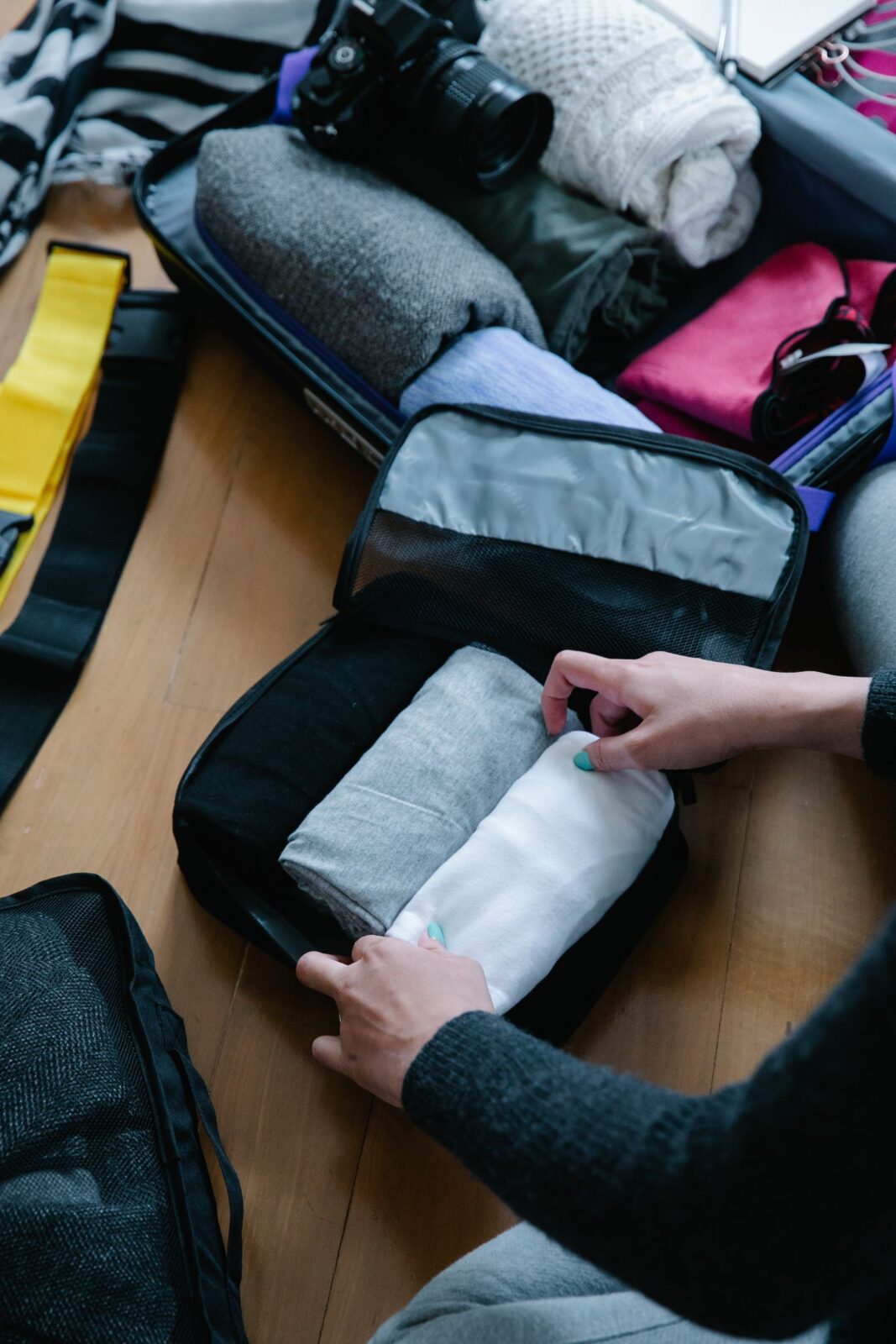
The gear-review site Pack Hacker’s packing cube guide draws the same line: standard cubes primarily organize, while a second “compression” zipper is what actually reduces the packed footprint, sometimes cutting a cube’s depth from around 4 inches down to roughly 1.25 inches. That’s a real, physical volume loss, not a marketing number — but it comes with trade-offs. Pack Hacker also notes compression creates more creasing in clothing and puts more ongoing stress on zippers and seams than a standard cube.
Non-compression cubes still help. They stop clothes from migrating into every gap in a suitcase, they let you lift out “outfit blocks” instead of digging, and mesh panels mean you can see what’s inside without unzipping everything on a hotel bed. What they don’t do is shrink your total clothing volume the way a compression zipper does.
Our Compression Math: How Much Volume These Sets Really Save
We calculated the actual volume reduction for the two true compression sets in this guide, using each brand’s own published expanded and compressed dimensions — no independent lab testing, just their own numbers run through the math.
| Set | Cube | Expanded volume | Compressed volume | Volume reduction (our calculation) |
|---|---|---|---|---|
| Nomatic Compression Packing Cubes | Small | 4 L | 1.5 L | 62.5% |
| Nomatic Compression Packing Cubes | Medium | 5.5 L | 2.5 L | 54.5% |
| Nomatic Compression Packing Cubes | Large | 10 L | 5 L | 50.0% |
| Thule Compression Cube Set | Small | 4 L (10×7×4 in) | ≈1.25 L (10×7×1.25 in) | ≈69% |
| Thule Compression Cube Set | Medium | 11 L (14×10×4 in) | ≈3.4 L (14×10×1.25 in) | ≈69% |
Two things stand out. First, Nomatic’s own numbers show diminishing returns as cubes get bigger — its large cube only compresses 50%, versus 62.5% for the small — which tracks with how compression zippers fight harder against a taller stack of clothing. Second, Thule’s depth-based compression (same footprint, thinner profile) produces a steeper reduction on paper, though real garments with buttons, zippers, or structure won’t compress as cleanly as the math suggests. Treat these as ceilings, not guarantees — a cube stuffed with stiff jeans will never hit its rated compression the way one packed with T-shirts will.
How to Choose Packing Cube Sizes
Match cube sizes to what you’re actually packing, not to the set’s marketing name — “medium” isn’t standardized across brands. Eagle Creek’s medium cube in its Reveal Cube Set holds 7 liters; REI’s medium expands up to 13 liters. Check the liters or cubic inches on the listing itself before assuming two “mediums” are interchangeable.
As a starting point for a one-week carry-on trip: one large cube for tops, one medium for bottoms, one small for underwear and socks, and a separate small or slim cube for anything you don’t want mixed in with clean clothes. Pack Hacker’s sizing guidance echoes this — multiple smaller cubes generally use suitcase space more efficiently than one oversized cube, because smaller cubes flex into corners a single big block can’t reach.
For checked-bag family travel, expandable non-compression sets like REI’s tend to work better than compression sets, since you’re optimizing for organization across multiple travelers rather than squeezing a single carry-on to its limit.
The 7 Packing Cube Sets Worth Buying in 2026
Each pick below is a real, current product with a verified price and spec sheet as of this guide’s publication date. We organized them by the traveler each one actually fits best, not by brand prestige.
1. Thule Compression Cube Set — Best for Carry-On-Only Travelers
Thule’s two-piece set (one small, one medium) pairs double compression zippers with 100-denier diamond ripstop nylon that’s bluesign-approved, plus YKK zippers rated for repeated compression cycles. It carries a 4.8-star average across 101 reviews on REI’s site, with 94% of reviewers recommending it.
Must-have: real YKK zippers on the compression seam, the part that fails first on cheaper sets. Nice-to-have: semitransparent fabric that lets you identify contents without full mesh. Dealbreaker to know: some owners note the ripstop nylon is noticeably heavier than ultralight alternatives — a real cost if you’re chasing carry-on weight limits, not just carry-on volume.
Price: $53.95 for the set. Best for: someone packing one carry-on who wants maximum squeeze without cheap zippers.
2. REI Co-op Expandable Packing Cube Set (Medium/Large) — Best for Checked-Bag Family Travel
REI’s expandable set does the opposite of compression: a 3-inch expansion zipper lets each cube grow when needed, from 8.5–13 liters (medium) up to 14–21 liters (large). It’s built from ripstop nylon with a PFAS-free DWR coating and mesh top panels, and it holds a 4.5-star average across 60 reviews, 93% recommending.
Must-have: the expansion zipper, which turns two cubes into effectively four size options. Nice-to-have: side carry handles that make it easy to hand a cube to a kid to carry. Dealbreaker to know: a few reviewers flagged mesh panels as not truly waterproof — fine for organization, not for a spill-proof barrier.
Price: $39.95 for the medium/large pair. Best for: families splitting one large checked bag across several travelers’ clothing.
3. Nomatic Compression Packing Cubes — Best for Heavy Packers Who Need Maximum Squeeze
Nomatic’s three-piece set (small, medium, large) claims up to 50% volume reduction through its zippered compression system, backed by the specific expanded-to-compressed numbers we calculated above. Mesh front panels show contents at a glance, and the outer shell is built to resist the added stress of daily compression.
Must-have: the small cube’s 62.5% compression ratio — the steepest of any cube in this guide by our calculation. Nice-to-have: four colorways if you’re color-coding cubes by traveler or category. Dealbreaker to know: at $79.99, it’s priced closer to premium sets than budget ones, and its compressed capacity (as low as 1.5 liters for the small cube) means you’re paying largely for the squeeze, not raw volume.
Price: $79.99 for the 3-pack. Best for: one-bag travelers stuffing a week of clothing into a single carry-on.
4. Peak Design Packing Cube Bundle — Best Premium Pick for Minimalist and Photo Travel
Peak Design’s bundle (small, medium, and a matching shoe pouch) uses 70-denier recycled nylon with an abrasion- and rip-resistant coating, an “ultrafast” tear-away main opening, and a secondary zipper pocket to separate dirty laundry from clean clothes. Total published capacity across the three pieces is 36 liters.
Must-have: the built-in dirty-clothes separator, which most sets in this guide don’t include at all. Nice-to-have: the tear-away opening, which is genuinely faster than fully unzipping a cube when you’re digging for one item. Dealbreaker to know: at $89.95 it’s the most expensive set here, and it’s new enough to REI’s catalog that it doesn’t yet have a meaningful customer review history — you’re buying on Peak Design’s reputation, not owner track record.
Price: $89.95 for the bundle. Best for: photographers and minimalist one-bag travelers who want a built-in dirty/clean split.
5. Eagle Creek Pack-It Reveal Cube Set — Best for Small Items and Accessories
This non-compression, three-piece set (extra-small, small, medium) runs 1, 3, and 7 liters — genuinely small volumes, better suited to accessories, chargers, and undergarments than as your only packing cubes for a full wardrobe. It’s made from 100% recycled 300-denier polyester with mesh panels, angled zippered openings for stacking or rolling, and carries a 4.4-star average across 12 reviews.
Must-have: the angled zipper opening, which makes it easier to see and grab items without fully opening the cube. Nice-to-have: recycled fabric, if sustainability factors into your gear choices. Dealbreaker to know: at 11 liters combined, this set alone won’t organize a full carry-on — treat it as a companion set for small items, paired with a larger cube for clothing.
Price: $59.00 for the 3-piece set. Best for: organizing electronics, toiletries, and small accessories separately from clothing.
6. Eagle Creek Pack-It Reveal Compression Set — Best for Bulky Sweaters and Jackets
Eagle Creek’s compression version pairs one small and one medium cube (1 and 3 liters uncompressed, per REI’s listing) in the same recycled 300-denier polyester and mesh construction, with a compression zipper specifically marketed for bulky layers like jackets and sweaters. It holds a 4.5-star average across 17 reviews on REI.
Must-have: a compression zipper actually rated for thick items, not just T-shirts. Nice-to-have: top handles that make it easy to carry as a standalone bundle. Dealbreaker to know: with only two small cubes totaling roughly 4 liters uncompressed, this is the smallest — and by our math, most expensive per liter — set in this entire guide. It’s a specialty add-on for one bulky item, not a full packing system.
Price: $50.00 for the 2-piece set. Best for: compressing a single jacket or sweater you don’t want to wear on the plane.
7. Amazon Essentials 4-Piece Packing Cube Set — Best Budget Pick
This is the set most first-time buyers land on by default: four non-compression cubes (small, medium, large, and slim) in 100% polyester with double zippers and mesh top panels, typically priced under $20. It won’t compress anything and its fabric is thinner than the ripstop or high-denier options above, but it’s a legitimate way to test whether packing cubes fit your travel style before spending $50–90.
Must-have: the double-zipper mesh top, which is the baseline feature that separates any packing cube from a plain stuff sack. Nice-to-have: the four-size assortment, which covers most single-traveler carry-on needs. Dealbreaker to know: lighter-denier fabric and basic zippers mean this set is more likely to show wear — fraying seams or sticking zippers — after a year of frequent travel than the pricier sets above.
Price: approximately $17–20 for the 4-piece set. Best for: anyone packing cubes for the first time who isn’t ready to commit to a premium set.
What a Liter of Organized Space Actually Costs
Sticker price alone doesn’t tell you whether a set is a good value — a $90 set with 36 liters of capacity can cost less per liter than a $50 set with 4. We calculated cost per liter using each set’s own published expanded (largest stated) capacity.
| Set | Price | Total expanded capacity | Price per liter (our calculation) |
|---|---|---|---|
| REI Co-op Expandable Set (M/L) | $39.95 | 34 L | $1.17 |
| Peak Design Packing Cube Bundle | $89.95 | 36 L | $2.50 |
| Thule Compression Cube Set (S/M) | $53.95 | 15 L | $3.60 |
| Nomatic Compression Cubes (S/M/L) | $79.99 | 19.5 L | $4.10 |
| Eagle Creek Reveal Cube Set (XS/S/M) | $59.00 | 11 L | $5.36 |
| Eagle Creek Reveal Compression Set (S/M) | $50.00 | 4 L | $12.50 |
This doesn’t mean the REI set is objectively “best” — a cheap price per liter is partly just a function of being a large, non-compression cube, which is structurally easier to make cheaply than a compressible one. But it’s a useful sanity check against paying a premium price for a small, specialty set like Eagle Creek’s Reveal Compression Set, which only makes sense if you specifically need to compress one or two bulky items.
Carry-On-Only vs. Checked-Bag Family Travel: Which Style Fits You
Carry-on-only travelers should lean toward compression cubes, because every liter reclaimed directly extends how much fits in a bag that can’t grow past airline dimensions. The Thule and Nomatic sets in this guide both reclaim 50% or more of their expanded volume by their own published specs, which is the difference between a carry-on that zips shut and one that doesn’t.
Checked-bag family travelers generally do better with non-compression, expandable sets like REI’s, because the priority shifts from squeezing volume to keeping four or five people’s clothing from turning into one giant pile. Expandable cubes let you size up for a bulky item without needing a dedicated compression zipper, and their lower price per liter means outfitting a whole family costs less than buying premium compression sets for everyone.
A practical middle ground many travelers land on: a large non-compression or expandable cube for daily clothes, plus one small compression cube reserved specifically for a jacket, swimsuit, or anything bulky you want to shrink down before it eats your remaining space.
Dealbreakers to Watch For
Zipper quality is the single biggest predictor of whether a packing cube survives repeated compression. Look for named zipper brands — YKK is the one that shows up across the higher-rated sets in this guide — rather than unbranded zippers on unfamiliar budget sets, since compression cubes put ongoing strain on that seam every time you close them.
Fabric denier matters more for compression cubes than non-compression ones, since compression stresses the material every packing cycle. The sets here range from 70-denier (Peak Design) to 300-denier (Eagle Creek) — higher denier generally means more abrasion resistance, at the cost of some extra weight.
Sizing confusion is a real, avoidable problem. Because “small,” “medium,” and “large” aren’t standardized across brands, always check the liter or cubic-inch figure on the listing itself, not just the size label, before assuming a set will fit your bag the way a previous one did.
Frequently Asked Questions
Do compression packing cubes damage clothes?
Compression cubes can add extra creasing to clothing, since the second zipper physically flattens garments rather than just organizing them. This matters most for structured items like blazers or button-downs, and matters least for knits and casual wear that shake out easily.
How many packing cubes do I actually need for a one-week trip?
Most one-week carry-on trips work well with three to four cubes: one large for tops, one medium for bottoms, one small for underwear and socks, and optionally a slim cube for anything you want kept separate, like swimwear or worn clothes.
Are expensive packing cubes worth it over a budget set?
Higher-priced sets generally buy you better zippers and higher-denier fabric that hold up longer under repeated compression, which matters most if you travel frequently. For occasional travelers or a first set, a budget non-compression set is a reasonable way to test whether the system fits your habits before spending more.
Can I use packing cubes in a checked bag, not just a carry-on?
Yes — packing cubes work in checked bags too, and for family travel they’re often more useful there, since they keep multiple travelers’ clothing separated inside one large shared suitcase rather than maximizing squeeze in a single carry-on.
Do packing cubes save more space than just rolling clothes loose?
Non-compression cubes mainly save space by preventing wasted gaps around loosely packed or rolled clothing, rather than shrinking the clothing itself. Compression cubes go a step further and physically reduce volume, by up to roughly 50–69% of their expanded size based on the manufacturer specs we calculated above.
Whichever set you choose, packing cubes are one piece of a bigger packing strategy. If you’re planning a specific trip, see our Hawaii packing list built around island-by-island weather, our week-by-week New England fall foliage packing guide, or our picks for the best daypacks for fall hiking if cubes are just one part of your gear list. For more travel gear coverage, browse our Travel Gear & Luggage category.