Some links on our site may earn us a commission at no extra cost to you. Learn more.
A beginner pottery wheel doesn’t need to cost a fortune, but three things separate a real starter wheel from a toy: a motor that won’t stall under wet clay, a wheel head wide enough for actual mugs and bowls, and a splash tray that doesn’t leak on your carpet. We compared six currently-sold beginner pottery wheels — from a $73.99 tabletop model to a $1,829.95 splurge pick — and built an original cost table showing what it really takes to go from empty box to a finished, fired piece at home.
Verdict: for most total beginners, the VEVOR 14-inch 450W Pottery Wheel (about $165.90) hits the best balance of a real wheel-head size, usable motor power, and a low enough price that a stalled hobby doesn’t sting. If you want to try the craft for under $80 before committing to a full setup, the VEVOR Mini Pottery Wheel (about $73.99) bundles clay, tools, and an apron in one box. Skip straight to the comparison table or the real cost of getting started if you’re short on time.
Is a home pottery wheel actually a realistic hobby to start?
Learn-at-home pottery has grown alongside the broader slow-craft movement, and unlike a lot of trend hobbies, a beginner pottery wheel isn’t a one-and-done purchase — the equipment holds resale value and the skill compounds the more you throw. The tradeoff most first-timers underestimate is space and mess: even a compact wheel needs a wipeable surface, a water source nearby, and tolerance for clay dust settling on the floor. If that sounds manageable, the six wheels below cover every realistic starting budget.
Table of Contents
- At a Glance: 6 Beginner Pottery Wheels Compared
- The Real Cost of Learning Pottery at Home
- The 6 Wheels, Ranked by Budget
- How to Choose a Beginner Pottery Wheel
- How We Researched This Guide
- Frequently Asked Questions
At a Glance: 6 Beginner Pottery Wheels Compared
Here’s the short version: prices, wheel-head size, and motor specs for all six wheels, side by side, verified against brand and retailer listings as of publication.
| Wheel | Price | Wheel-Head Diameter | Motor / Speed | Weight | Best For |
|---|---|---|---|---|---|
| VEVOR Mini Pottery Wheel | ~$73.99 | 6 in | 30W, 0–140 RPM | Compact tabletop | Trying pottery before you commit |
| VEVOR 14-Inch 450W Pottery Wheel | ~$165.90 | 14 in | 450W, 60–300 RPM | Tabletop, height-adjustable legs | Best overall budget full-size wheel |
| Speedball Artista 1/3 HP | ~$599.99 | 11 in | 1/3 HP, 0–220 RPM | ~40 lbs shipping | Committed beginners who want a name-brand wheel |
| Shimpo Aspire 1/3 HP Tabletop | ~$619.98–$699.98 | 7 in | 1/3 HP (100W DC), 0–230 RPM | ~25 lbs | Small apartments and desk setups |
| Speedball Clay Boss 1/2 HP | ~$1,049.99 | 14 in | 1/2 HP, 0–240 RPM | 100-lb centering capacity | Beginners planning to stick with it for years |
| Shimpo VL Whisper 1/2 HP | ~$1,829.95 | 14 in | 400W, 0–250 RPM | 135 lbs | Quietest wheel, splurge pick |
All prices are approximate and were current at the time of research — see our methodology note below before you check out.
The Real Cost of Learning Pottery at Home
The wheel is only the entry fee. A genuine at-home starter setup also needs clay, a handful of trimming tools, and a way to actually finish a piece — either by firing it in a kiln or by working entirely in air-dry clay. This is the part most buying guides skip, so we built our own numbers using named, currently-published pricing.
For clay, we used Wheel & Clay’s pottery cost breakdown, which puts a 50-lb box of stoneware clay at $25–$35 (roughly $5–$7 for the 10 lbs most total beginners work through in their first few weeks) and prices basic throwing and trimming tools — wire cutters, ribs, a needle tool, scrapers, and a sponge — at $35–$50 combined when bought individually. For firing, we used Krueger Pottery Supply’s published firing-fee sheet, which charges $2/lb for a bisque firing and $2.25/lb for a cone 6 glaze firing using your own glazes — about $4.25/lb combined, or roughly $42.50 to bisque- and glaze-fire 10 lbs of finished ware.
| Setup | Wheel | Starter Clay (~10 lb) | Basic Tool Kit | Getting It Fired | Realistic Total |
|---|---|---|---|---|---|
| Try-it-first (air-dry, no kiln needed) | VEVOR Mini Pottery Wheel — $73.99 | Included; a 5-lb air-dry refill runs about $41.69 (NOGIS, per its Walmart listing) | Included in kit | Not needed — air-dry clay skips firing entirely | ~$74–$116 |
| Budget full-size + local studio firing | VEVOR 14-Inch 450W — $165.90 | ~$5–$7 | ~$35–$50 | ~$42.50 (Krueger Pottery, bisque + glaze) | ~$248–$265 |
| Step-up wheel + local studio firing | Speedball Artista — $599.99 | ~$5–$7 | ~$35–$50 | ~$42.50 | ~$682–$699 |
| Built-to-last + local studio firing | Speedball Clay Boss — $1,049.99 | ~$5–$7 | ~$35–$50 | ~$42.50 | ~$1,132–$1,149 |
No local studio nearby? Some ceramics studios also fire outside work by volume instead of weight — BKLYN CLAY’s outside-firing policy, for example, charges 4 cents per cubic inch per firing for members and 8 cents per cubic inch for non-members, so a bisque-plus-glaze pair of firings runs roughly 8–16 cents per cubic inch of finished pottery. Search “[your city] pottery studio outside firing” to find a local option before you buy a wheel — it’s the piece most beginners forget to plan for.
The 6 Wheels, Ranked by Budget
1. VEVOR Mini Pottery Wheel — Best for Trying Pottery Before You Commit
At about $73.99 per Best Buy’s listing, this 6-inch tabletop wheel is the cheapest real electric pottery wheel we found that isn’t a toy. It runs a 30W motor across a 0–140 RPM range and ships with wood shaping tools, an MDF work board, paint, a palette, clay, a brush, an apron, and a hex wrench included — a genuinely complete starter kit in one box.
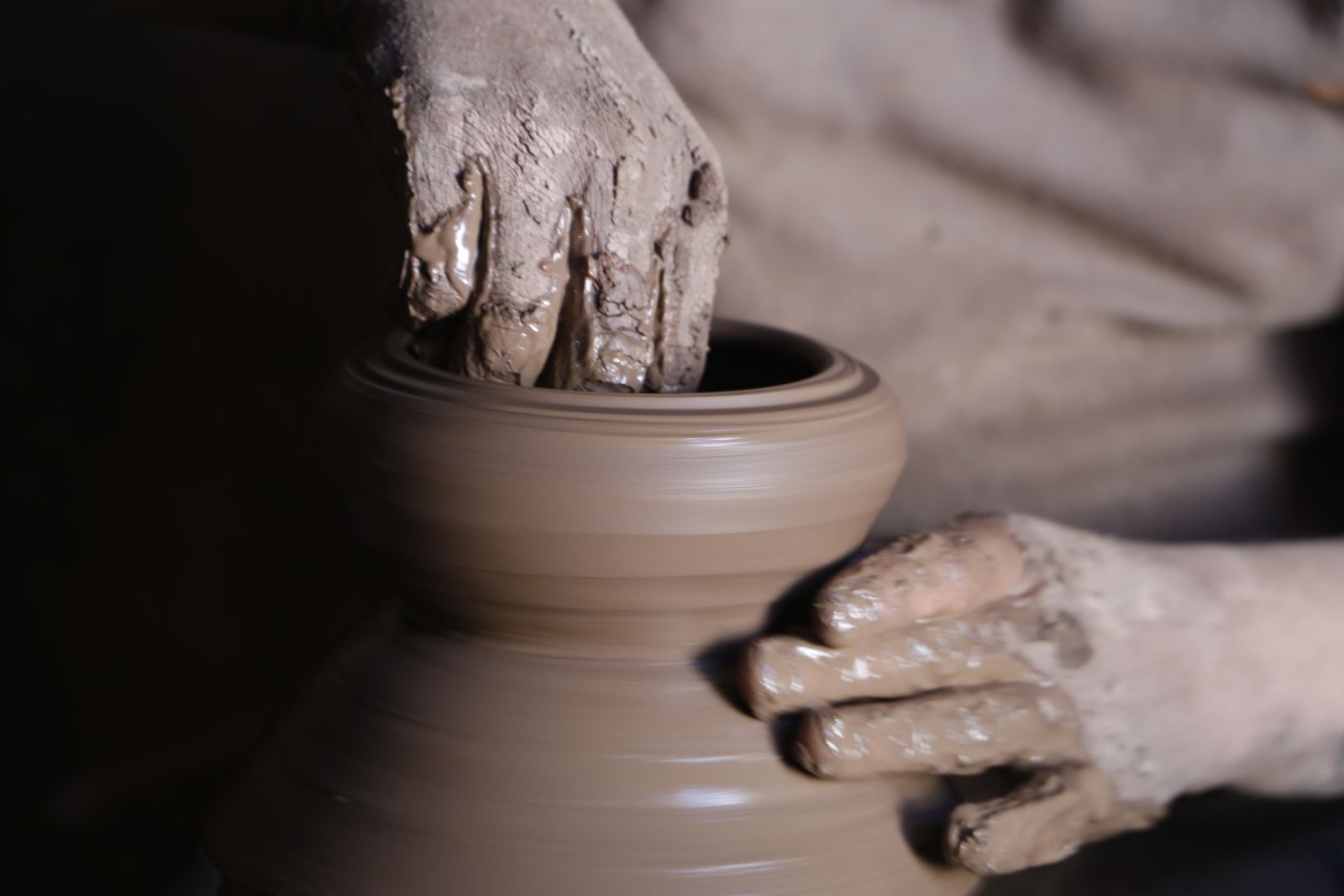
Dealbreaker to know: the 6-inch turntable and 30W motor cap out around 6.6 lbs of clay capacity, so this wheel is built for small cups and coasters, not dinner-plate-sized bowls. Treat it as a learning tool, not a long-term studio wheel.
- Pros: low price, complete kit in the box, small enough for a desk or kitchen table
- Cons: limited clay capacity, small wheel head limits piece size, motor is entry-level
2. VEVOR 14-Inch 450W Pottery Wheel — Best Overall Budget Full-Size Wheel
This is the wheel we’d point most total beginners toward. Priced around $165.90 at Best Buy, it pairs a full 14-inch aluminum-alloy wheel head with a 450W brushless motor and a 60–300 RPM range controlled by a foot pedal — specs that match wheels costing four times as much. It ships with a detachable splash basin and a mixed set of stainless-steel and wood sculpting tools.
Independent reviewer The Pottery Wheel tested several budget VEVOR models and called an extendable-leg VEVOR wheel “powerful enough to do everything that I need it to do,” measuring roughly 60 decibels of operating noise — noticeable but not disruptive in a shared home. The same review flagged one honest dealbreaker across VEVOR’s budget lineup: most of these wheels skip pre-drilled bat pin holes, so you’ll want a $15–$20 adapter like a BatMate if you plan to use bats regularly.
- Pros: full-size 14-inch wheel head, strong motor for the price, height-adjustable legs
- Cons: no pre-drilled bat pin holes, motor still slows under heavy hand pressure on large pieces, reliability reports are mixed at this price tier
3. Speedball Artista 1/3 HP — Best for Beginners Who Want a Name-Brand Wheel
At roughly $599.99 (per Soul Ceramics’ listing, down from a $749 list price), the Speedball Artista steps up to an 11-inch cast wheel head, a 1/3 HP motor, and a 0–220 RPM range with hand-lever speed control. The package includes two bats, a two-piece splash pan, and two mixing buckets, backed by a 5-year warranty.
Dealbreaker to know: the foot pedal and folding legs are sold separately, so factor in another $80–$150 if you want seated, foot-controlled throwing rather than tabletop hand-lever control.
- Pros: established craft brand, real 1/3 HP motor, strong warranty coverage
- Cons: foot pedal and legs cost extra, smaller 25-lb centering capacity than the Clay Boss or Whisper
4. Shimpo Aspire 1/3 HP Tabletop — Best for Small Spaces
Priced around $619.98–$699.98 depending on retailer (per Clay King), the Shimpo Aspire trades wheel-head size for footprint: a compact 7-inch alloy head, a 100W DC motor rated at 1/3 HP, and a 20-lb centering capacity. It measures just 20″ x 14.5″ x 9″, making it one of the few electric wheels that genuinely fits on an apartment desk. It comes with two bats, a one-piece splash pan, and your choice of left- or right-handed rotation.
- Pros: genuinely compact, Shimpo’s build quality and 5-year warranty, left-handed option available
- Cons: 7-inch wheel head is small for anything beyond mugs and bowls, price rivals larger wheels
5. Speedball Clay Boss 1/2 HP — Best for Beginners Planning to Stick With It
At about $1,049.99 (per Clay King, discounted from a $1,399 list price), the Clay Boss is where beginner wheels start crossing into semi-professional territory: a 14-inch cast and machined wheel head, a 1/2 HP industrial motor, a 100-lb centering capacity, and a 0–240 RPM range via foot pedal. It comes with two bats, bat pins, and a 10-year warranty.
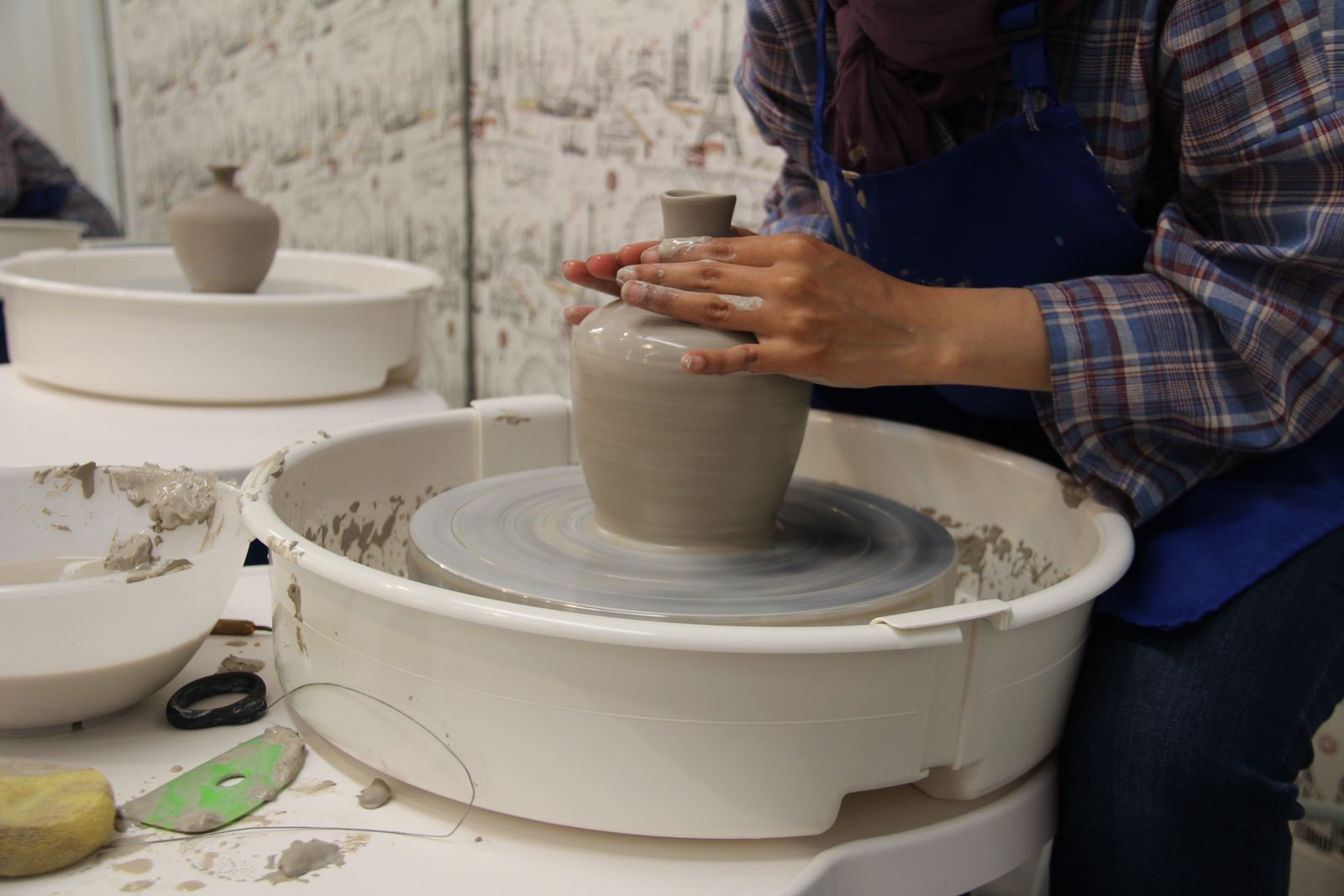
This is genuinely more wheel than most total beginners need in month one — but if you already know pottery is a hobby you’ll keep, buying once here can be cheaper than upgrading twice.
- Pros: serious centering capacity, industrial-grade motor, exceptional 10-year warranty
- Cons: overkill for a first month of lessons, price and weight assume a dedicated space
6. Shimpo VL Whisper 1/2 HP — Best Splurge / Quietest Wheel
At roughly $1,829.95 (per Clay King, marked down from $2,151.84), the VL Whisper is the aspirational pick on this list — but it earns its name. It runs a direct-drive DC brushless motor rated 1/2 HP (400W) across a 0–250 RPM range, drives a 14-inch wheel head, and centers up to 100 lbs of clay. The Pottery Network’s hands-on review called it “remarkably quiet,” noting “you’ll definitely notice how silent this wheel is when running” compared with other brands, and praised its reversible wheel head for left-handed potters. The same review’s one real knock: its 210–250 RPM top speed trails Brent’s professional wheels, which reach 240–250 RPM — a gap the reviewer says rarely matters for hobby work.
- Pros: genuinely the quietest wheel in this roundup, 5-year warranty, reversible head for left-handers
- Cons: the most expensive wheel here by a wide margin, 135 lbs makes it a permanent fixture rather than something you tuck away
How to Choose a Beginner Pottery Wheel
How big should the wheel head be?
Most functional mugs and bowls need at least a 10–11 inch wheel head; 14 inches gives more room to grow into bigger forms. Anything under 8 inches, like the compact Aspire or the 6-inch mini wheels, works fine for small pieces but will feel cramped once you’re throwing anything dinner-plate-sized.
Does motor power matter for beginners?
Yes, more than most first-time buyers expect. A 1/3 HP motor (like the Artista or Aspire) handles centering small-to-medium amounts of clay comfortably; a 1/2 HP motor (Clay Boss, VL Whisper) keeps its speed steady even when you lean into a larger piece. Sub-100W motors on the cheapest mini wheels can bog down past a few pounds of clay — fine for cups, frustrating for anything bigger.
What honestly goes wrong with budget wheels?
Based on named reviewer testing rather than marketing copy, the recurring issues are: missing pre-drilled bat pin holes on most sub-$200 wheels, motors that slow under firm hand pressure on bigger forms, and splash trays on the smallest mini wheels that can leak if overfilled. None of the wheels we researched had reported overheating or structural wobble in long-session testing — but always follow the manufacturer’s guidance on maximum clay weight and continuous run time.
Should you buy a splash tray wheel or a splash-pan-free one?
Every wheel on this list ships with some form of splash pan or basin, and for home use that’s non-negotiable — throwing wet clay without one sprays a fine mist of slip across the surrounding floor and walls. The detail worth checking before you buy is whether the basin is a single sealed piece (Shimpo Aspire) or a two-piece pan that separates for cleaning (Speedball Artista, Speedball Clay Boss). Two-piece pans are easier to rinse out but have more seams where water can seep through if you’re not careful.
What should you budget for beyond the wheel itself?
Even the most complete beginner kits leave a few gaps. Plan on a canvas bat or two beyond what’s included, a bucket for wedging and cleanup water, and a way to keep unfinished clay from drying out between sessions — a sealed plastic tub or a few yards of plastic sheeting works fine and costs under $10. None of this changes which wheel is right for you, but it’s worth budgeting for alongside the cost breakdown above.
Building a broader at-home craft habit? Our beginner embroidery kit guide and watercolor paint set roundup cover lower-cost hobbies with no kiln required, and our diamond painting kit guide is a good next stop if you want something screen-free but even less messy than clay. You’ll find more picks like these in our hobbies and entertainment coverage.
How We Researched This Guide
We verified every wheel’s specs directly against brand and retailer product pages — VEVOR, Best Buy, Soul Ceramics, Clay King, and Krueger Pottery Supply among them — and cross-checked hands-on impressions against named third-party reviews from The Pottery Wheel, The Pottery Network, and Bentham Pottery. We did not physically test these wheels ourselves; all performance claims in this guide are attributed to their original source. Our editorial approach is detailed in full at our editorial standards page.
Prices are approximate, current as of publication, and change frequently — confirm the latest price with the retailer before buying.
Published August 8, 2026. Last updated August 8, 2026.
Frequently Asked Questions
Do beginner pottery wheels come with clay included?
Sometimes. Mini and compact kits like the VEVOR Mini Pottery Wheel typically bundle a small amount of clay, tools, and an apron. Full-size wheels like the VEVOR 14-Inch, Speedball Artista, and Shimpo models are usually sold as the wheel only — you’ll buy clay separately, generally $5–$7 for 10 lbs of stoneware per Wheel & Clay’s cost guide.
What wheel-head size is best for a total beginner?
10 to 14 inches covers most beginner projects, from mugs to mid-size bowls. Compact 6–7 inch wheels work for small pieces and tight spaces but limit how large your finished pottery can get.
How loud are these wheels?
Budget VEVOR wheels tested by The Pottery Wheel measured around 50–60 decibels, similar to a quiet conversation. The Shimpo VL Whisper is built specifically to run quieter still, according to The Pottery Network’s review.
Can I finish pottery at home without buying a kiln?
Yes. Many local ceramics studios offer pay-per-piece or per-cubic-inch outside firing for non-members — BKLYN CLAY, for example, charges 4–8 cents per cubic inch per firing. Alternatively, air-dry clay skips firing entirely, though pieces won’t be waterproof or food-safe the way kiln-fired, glazed ceramics are.
How much should a total beginner realistically budget?
Plan on roughly $75–$120 for an air-dry, no-kiln setup, or about $250–$265 for a full-size wheel plus clay, basic tools, and a local studio firing your first batch of pieces — see our full cost breakdown above for the math.
Do I need a foot pedal to learn on a pottery wheel?
It helps but isn’t mandatory. The VEVOR wheels and the Speedball Clay Boss include a foot pedal standard; the Speedball Artista uses hand-lever speed control unless you add a pedal separately, which some beginners prefer while learning to center clay with both hands.