Some links on our site may earn us a commission at no extra cost to you. Learn more.
The best backup camera kit for most cars that never came with one is the AUTO-VOX Solar3A Plus (about $130–$200) — a wireless, solar-charged camera that mounts over your license plate with no cable to fish through the trunk, pairing to a dash monitor in roughly twenty minutes. If you’re outfitting a truck, trailer, or RV instead, the Furrion Vision S+ (from $364.95) is built specifically for towing, with a sharkfin-mounted 1080p camera and room to add side views. And if you just want the cheapest version that works, the Pyle PLCM7500 (around $79) is a wired 7-inch kit that’s been an auto-parts-store staple for years.
Below are seven real, currently-sold backup camera kits, an original cost table that prices in installation time (not just the sticker), and the honest trade-offs — wired reliability versus wireless convenience, and what a backup camera can and can’t do for your safety.
Our picks at a glance
| Kit | Best for | Type | Street price* |
|---|---|---|---|
| AUTO-VOX Solar3A Plus | Best overall | Wireless / solar | ~$130–$200 |
| Furrion Vision S+ | Trucks, trailers & towing | Wireless | ~$365–$1,010 |
| Pyle PLCM7500 | Cheapest wired kit that works | Wired | ~$79–$113 |
| Pyle PLCMTR76WIR | Cheapest wireless kit that works | Wireless | ~$140–$200 |
| AUTO-VOX W12 1080P | Simplest solo install | Wireless | ~$80–$140 |
| AUTO-VOX WF4 3-Channel | Multi-camera RV rigs | Wired | ~$180–$350 |
| Pyle PLCMPS48 | Parking-sensor integration | Wired + sensors | ~$87–$125 |
*Prices are approximate and pulled from each brand’s own site; see the pricing note near the end of this guide.
How to choose a backup camera kit: must-haves vs. nice-to-haves
Two things separate a backup camera kit that works from one that ends up in a drawer, and everything else is a nice-to-have you can shop for on top.
Must-have #1: a waterproof exterior camera. The camera lives outside, exposed to rain, road spray, and car washes, so it needs a real weatherproof rating. Furrion publishes an IP65 rating on its sharkfin rear camera, per the spec sheet on furrion.com — that’s the kind of number you want to see in writing before you buy, not just a “weatherproof” claim on a marketing page. Several of the Pyle kits below advertise night vision and waterproofing on their own product pages but don’t publish a specific IP number, which is worth a follow-up question to the retailer if you park outside year-round.
Must-have #2: cable length or signal reliability that actually reaches. On a wired kit, the camera cable has to run from the rear bumper to the dash — check the published cable length against your vehicle’s length before ordering, especially on trucks, vans, or anything towing a trailer where the run is longer than a sedan’s. On a wireless kit, the spec that matters is signal range and stability, not just “wireless.” Furrion’s 2.4 GHz signal is rated for a stable connection up to about 100 feet while driving and nearly 500 feet in open, stationary conditions, according to furrion.com — figures worth comparing against any wireless kit you’re considering, since range specs vary a lot by brand.
Nice-to-have: parking-guide overlay lines. Dynamic or static guidelines overlaid on the monitor help judge distance to a curb or the car behind you, but they’re a convenience layer, not a substitute for the camera’s actual field of view.
Nice-to-have: night vision and DVR/loop recording. Infrared night vision helps in a dark driveway; loop recording (built into several AUTO-VOX and Pyle models) turns the rear camera into a secondary dash cam. Useful, but neither is the reason you’re buying this kit.
Honest dealbreaker: wireless kits can suffer interference. A 2.4 GHz wireless backup camera shares spectrum with garage door openers, other vehicle electronics, and nearby Wi-Fi — occasional signal drop or a momentarily frozen image is a known trade-off of going cable-free, not a defect unique to one brand. If you tow through areas with heavy RF congestion (truck stops, dense parking structures), factor that in. A wired kit doesn’t have this failure mode, which is the honest case for running the cable despite the extra install time.

The real cost of a backup camera kit, once you count install time
Every kit below lists a sticker price, but the sticker price isn’t the whole cost — a wired kit is usually cheaper to buy and more expensive to install than a wireless one. We built a simple formula to make that trade-off visible: total cost = kit price + (our estimated DIY install hours × what an hour of your time is worth to you). The install-time estimates are our own editorial judgment based on each kit’s connection type and camera count, not a manufacturer claim, so treat the two “value of time” columns as a way to see how the trade-off shifts — plug in your own hourly rate if $25 or $50 doesn’t match how you think about your time.
| Kit | Type | Base price | Est. DIY install time | Total @ $25/hr | Total @ $50/hr |
|---|---|---|---|---|---|
| AUTO-VOX W12 1080P | Wireless | $79.99 | 20 min (0.33 hr) | $88.32 | $96.64 |
| Pyle PLCM7500 | Wired | $79.19 | 2.0 hr | $129.19 | $179.19 |
| Pyle PLCMPS48 (+ sensors) | Wired + sensors | $87.19 | 2.5 hr (drilling for sensors) | $149.69 | $212.19 |
| AUTO-VOX Solar3A Plus | Wireless / solar | $129.99 | 20 min (0.33 hr) | $138.32 | $146.64 |
| Pyle PLCMTR76WIR | Wireless | $139.99 | 25 min (0.42 hr) | $150.41 | $160.82 |
| AUTO-VOX WF4 3-Channel | Wired, multi-camera | $179.99 | 3.0 hr (multiple runs) | $254.99 | $329.99 |
| Furrion Vision S+ (base) | Wireless | $364.95 | 45 min (0.75 hr) | $383.70 | $402.45 |
The pattern holds across every row: the wireless kits move down the ranking (relatively) as the hourly rate rises, because there’s no cable run to eat your afternoon. The two wired-with-drilling kits — the standard Pyle wired camera and the sensor-equipped PLCMPS48 — climb fastest, because a full cable run from bumper to dashboard, tucked under weatherstripping and trim, realistically eats an afternoon rather than a coffee break. None of that means wired is a bad buy — it means a wired kit’s true cost depends heavily on how much you value the two-ish hours it takes, or what a shop charges to do it for you.
AUTO-VOX Solar3A Plus — best overall backup camera kit
The Solar3A Plus is the pick for a normal car that simply never came with a backup camera. It’s wireless and solar-charged, so there’s no cable to route and, per AUTO-VOX’s own product listing, no wiring into the reverse-light circuit either — the camera clips over or near the license plate and a small solar panel keeps its battery topped off. Pricing on auto-vox.com runs $129.99–$199.99 depending on the configuration, and the step-up Solar3A Plus Max variant adds a 7.2-inch monitor with built-in DVR loop recording if you want the rear camera doubling as a mini dash cam.
Pros: no cable run; solar charging means minimal battery-maintenance thinking; dual-channel monitor option. Cons: like any wireless kit, it depends on a clean 2.4 GHz signal; the base configuration doesn’t include DVR recording — that’s reserved for the pricier Max variant. Best for: a daily driver or family car that just needs the visibility a factory camera would have given it.
Furrion Vision S+ — best for trucks, trailers & towing
The Vision S+ isn’t really a car accessory — it’s an RV and towing system that happens to solve the same problem. Furrion’s own spec sheet lists a 1080p sharkfin rear camera with a 140° field of view, IP65 waterproofing, LED marker lights, motion detection, and an auto-wake security mode, with optional 65°-view side cameras for watching your trailer’s blind spots. It runs on a 2.4 GHz digital wireless signal Furrion rates for a stable picture up to roughly 100 feet while driving and close to 500 feet in open, parked conditions — plenty for a truck-and-trailer combo. Configurations range from $364.95 for a single-camera setup up to $1,010 for a full multi-camera monitor package, per furrion.com.
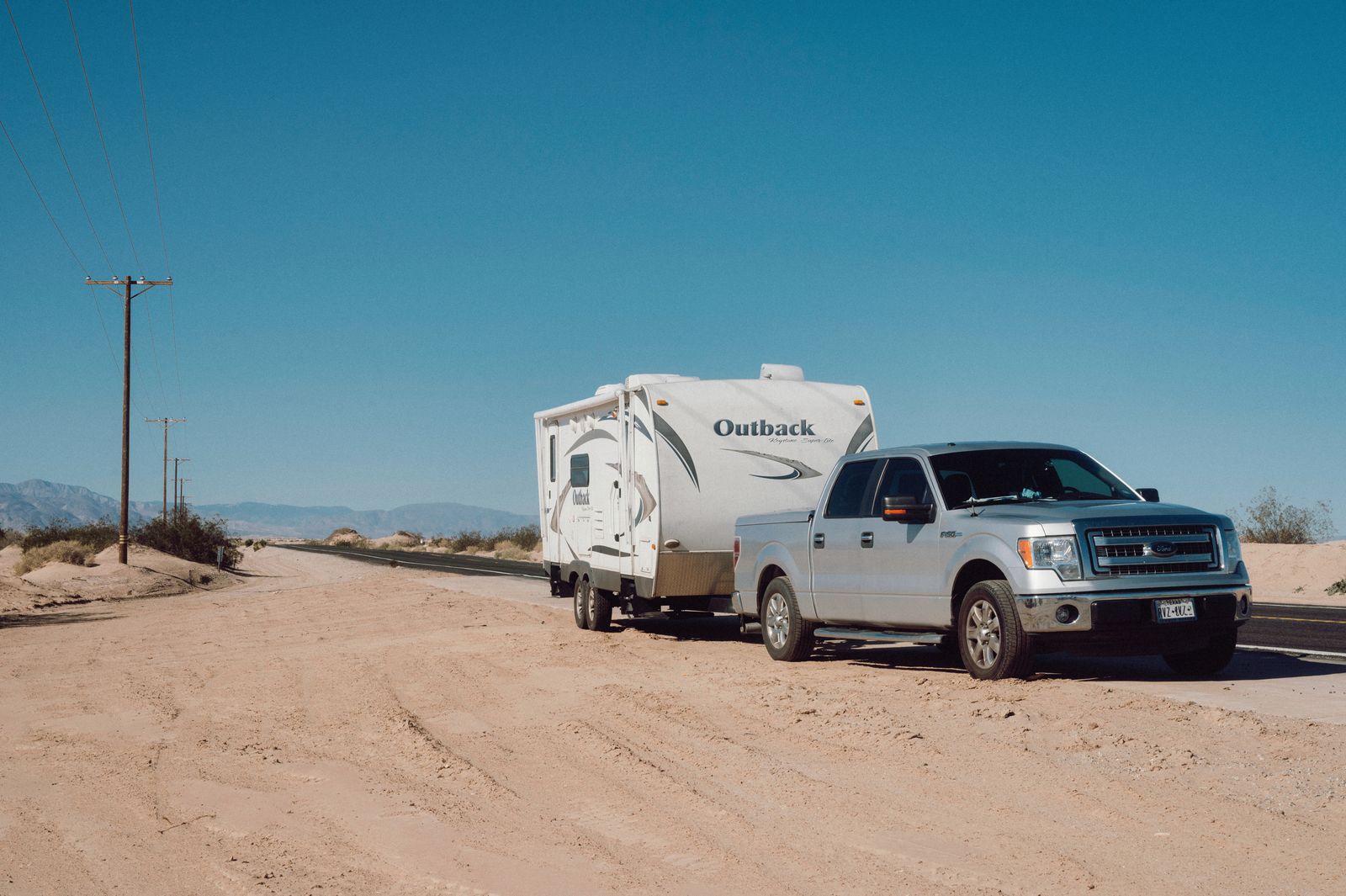
Pros: purpose-built for towing, with documented range and IP65 waterproofing; side-camera expansion for trailer blind spots; park-assist guide lines built in. Cons: priced well above the car-focused kits on this list, and a fully loaded multi-camera package can top $1,000. Best for: anyone hauling a trailer, camper, or horse box who needs a rear view rated for towing distances, not just a driveway.
Pyle PLCM7500 — cheapest wired kit that still works
The PLCM7500 is the no-frills answer: a wired backup camera paired with a 7-inch LCD monitor, listed at $79.19 (marked down from $113.13) on pyleusa.com, with night vision and a waterproof camera rating both confirmed on Pyle’s own product page — though, as noted above, Pyle doesn’t publish a specific IP number for it. Being wired means no signal to lose, at the cost of the install time in the table above.
Pros: lowest price of any full kit here with a legitimate 7-inch monitor; no wireless interference to worry about. Cons: full cable run required; no published exact waterproof rating to compare against competitors. Best for: budget-first buyers who don’t mind spending an afternoon running a cable.
Pyle PLCMTR76WIR — cheapest wireless kit that still works
Same 7-inch display footprint as the PLCM7500, but wireless — Pyle lists the PLCMTR76WIR at $139.99 (down from $199.99) with night vision and a weatherproof camera rating on its own listing. It’s the middle ground: you pay roughly $60 more than the wired PLCM7500 up front, but per our table above you get almost all of that back in saved install time.
Pros: Pyle’s largest monitor size without a cable run; straightforward mount-and-pair setup. Cons: the same wireless-interference caveat that applies to any 2.4 GHz kit. Best for: buyers who want the PLCM7500’s price bracket but don’t want to run a cable.
AUTO-VOX W12 1080P — simplest solo install
Listed at $79.99–$139.99 on auto-vox.com depending on bundle, the W12 pairs a 1080p wireless camera with a compact 5-inch monitor. It’s the smallest, simplest kit on this list — no solar panel, no DVR, no multi-camera option, just a camera and a screen — which is exactly the appeal for someone installing it alone in a driveway with no help.
Pros: lowest AUTO-VOX price point; smallest monitor footprint if dash space is tight. Cons: 5-inch screen is noticeably smaller than the 7-inch options above, which matters if you have trouble seeing detail from the driver’s seat. Best for: a second car, a hand-me-down vehicle, or anyone who wants the minimum viable kit.
AUTO-VOX WF4 3-Channel RV — best multi-camera system
The WF4 is a wired, multi-camera system priced $179.99–$349.99 on auto-vox.com, built for RVs and larger vehicles where one rear camera doesn’t cover the whole blind-spot picture — think a motorhome with a side entry step, a box truck, or a car-and-trailer combo where you want more than one angle. Being wired across multiple cameras is exactly why its install-time estimate in our table is the highest of the group; running three or four cable sets is a real project, not a quick afternoon task.
Pros: up to four camera channels for full-perimeter coverage; wired reliability across every channel. Cons: the most labor-intensive install on this list by a wide margin. Best for: RVs, box trucks, and multi-camera setups where one rear view genuinely isn’t enough.
Pyle PLCMPS48 — best for parking-sensor integration
The PLCMPS48 pairs a wired backup camera and 4.3-inch LCD with built-in parking sensors, listed at $87.19 (down from $124.56) on pyleusa.com. If you’ve ever wanted the audible proximity beeping of a factory parking-sensor system alongside a visual camera feed, this is the kit that bundles both instead of making you buy them separately.
Pros: only kit on this list combining a camera with parking sensors out of the box; competitively priced for the added hardware. Cons: smallest monitor of the full-kit options (4.3 inches), and sensor installation typically means drilling into the rear bumper, which is why it carries the longest install estimate in our table. Best for: drivers who want both audible and visual parking assistance in one purchase.
What a backup camera kit does — and doesn’t — do for safety
A backup camera kit adds a genuinely useful field of view behind your vehicle, especially for spotting low obstacles, curbs, and small children or pets that mirrors alone can miss. But it doesn’t replace checking your mirrors, and it doesn’t replace turning around and looking over your shoulder before and while you back up. Camera lenses have blind spots and distortion at the edges of the frame, wireless signals can momentarily drop, and a screen is one more thing competing for your attention at exactly the moment you need to be watching the space around your car. Treat any camera in this guide as an added layer of visibility, not a stand-in for the basic habit of looking before you move.
FAQ
Should I buy a wired or wireless backup camera kit?
Wireless kits install faster and skip the cable run, which our table above shows is worth real money once you count install time — but they can suffer occasional interference. Wired kits cost more time to install but have no signal to lose. If you’re not confident running a cable, or your vehicle has a long wheelbase, wireless is the easier path.
Will a backup camera kit work if my car has no factory screen?
Yes — every kit in this guide includes its own dedicated monitor that mounts to the dash or windshield, so a factory infotainment screen isn’t required. Some kits also offer mirror-mount monitors that clip over your existing rearview mirror instead of adding a separate screen.
Can I install a backup camera kit myself?
Most wireless kits are designed for a DIY install with basic tools — mounting the camera, running power to a tail light or reverse-light circuit, and placing the monitor. Wired kits add a cable-routing step that takes longer, as shown in the cost table above. If you’re not comfortable working near your vehicle’s wiring, a professional installer or auto electronics shop can handle either type.
Do wireless backup cameras suffer from interference?
They can. Most wireless kits, including several in this guide, transmit over the 2.4 GHz band, which is shared with garage door openers, other vehicle electronics, and nearby Wi-Fi networks. Occasional signal drop or a brief frozen frame is a known trade-off of going cable-free — it’s not unique to one brand, and it’s worth weighing against the install-time savings if you tow or park in areas with a lot of wireless traffic.
Does a backup camera replace checking my mirrors?
No. A backup camera adds visibility, particularly for low obstacles near the bumper, but it doesn’t replace checking your mirrors and turning to look before and during a reverse maneuver. Treat it as an extra layer, not a substitute for that habit.
Do I need a separate kit for towing a trailer?
It helps. Trailer- and RV-rated kits like the Furrion Vision S+ are built with longer-range wireless signals and optional side cameras for the trailer’s blind spots, which a car-focused kit generally isn’t designed to cover. If you tow regularly, size up to a towing-specific system rather than stretching a car kit’s range.
How we researched this guide
We didn’t install or road-test these kits ourselves for this guide. What we did do: pull current model names, configurations, and pricing directly from AUTO-VOX, Furrion, and Pyle’s own product listings, verified in July 2026, and cross-check monitor sizes, connection type, and published specs (like Furrion’s IP65 rating and wireless range figures) model by model. Where a brand’s listing didn’t publish a spec — a specific IP waterproof number on several Pyle and AUTO-VOX models, for instance — we said so rather than guess. The install-time-value table is our own editorial estimate based on each kit’s connection type and camera count, built to make the wired-versus-wireless trade-off visible rather than to represent a manufacturer-published figure. Our full approach lives in our editorial standards. Prices are approximate, current as of publication, and change frequently — confirm the latest price with the retailer before buying.
Published July 2026. Diversify Media.
The bottom line
For most cars that never came with a backup camera, the AUTO-VOX Solar3A Plus is the pick: wireless, solar-charged, and priced to make sense against the install-time math above. Towing a trailer or outfitting an RV points you to the Furrion Vision S+ instead, and a tight budget is well served by either Pyle kit depending on whether you’d rather spend money or spend an afternoon with a cable. For the rest of the in-car upgrade list, see our roundups of the best dash cams in 2026 and the best wireless CarPlay adapters, round out your glovebox with our best OBD2 scanners guide, or browse everything in Smart Car Gadgets.