
Some links on our site may earn us a commission at no extra cost to you. Learn more.
The best cooperative board games for family game night in 2026 put everyone on the same side against the game itself — no one gets eliminated, no one storms off after losing to a sibling, and a 6-year-old and a grandparent can genuinely contribute to the same win. Our picks span ages 5 and up, prices from about $13 to $45, and play styles from 20-minute card games to hour-long strategy sessions. Forbidden Island is our top pick for most families starting out; Hanabi is the best value per player; Outfoxed! is the easiest entry point for kids under 8.
Quick Picks: 7 Cooperative Board Games Worth Buying
- Best overall / best gateway game: Forbidden Island — ~$22, 2-4 players, ages 10+
- Best for a “real” hobby-game feel: Pandemic — ~$40, 2-4 players, ages 8+
- Best value per player: Hanabi — ~$13, 2-5 players, ages 8+
- Best escalating-difficulty format: The Crew: The Quest for Planet Nine — ~$16, 3-5 players, ages 10+
- Best for big groups (up to 7): Mysterium — ~$40, 2-7 players, ages 10+
- Best for kids under 8: Outfoxed! — ~$16, 2-4 players, ages 5+
- Best party-style pick for mixed-age crowds: Just One — ~$25, 3-7 players, ages 8+
All seven are currently in print and sold by major retailers as of this writing. Prices move constantly, so treat every figure here as a starting point, not a quote.
Why Cooperative Board Games Are Different From Party Games
A cooperative board game has one built-in rule that changes everything: every player is working toward the same win or loss. That’s a meaningfully different category from party games or team-vs-team trivia — there’s no “you lose, I win” moment that can sour a game night with kids or competitive relatives. The game itself is the opponent, whether that’s a spreading disease, a rising tide, or a running clock.
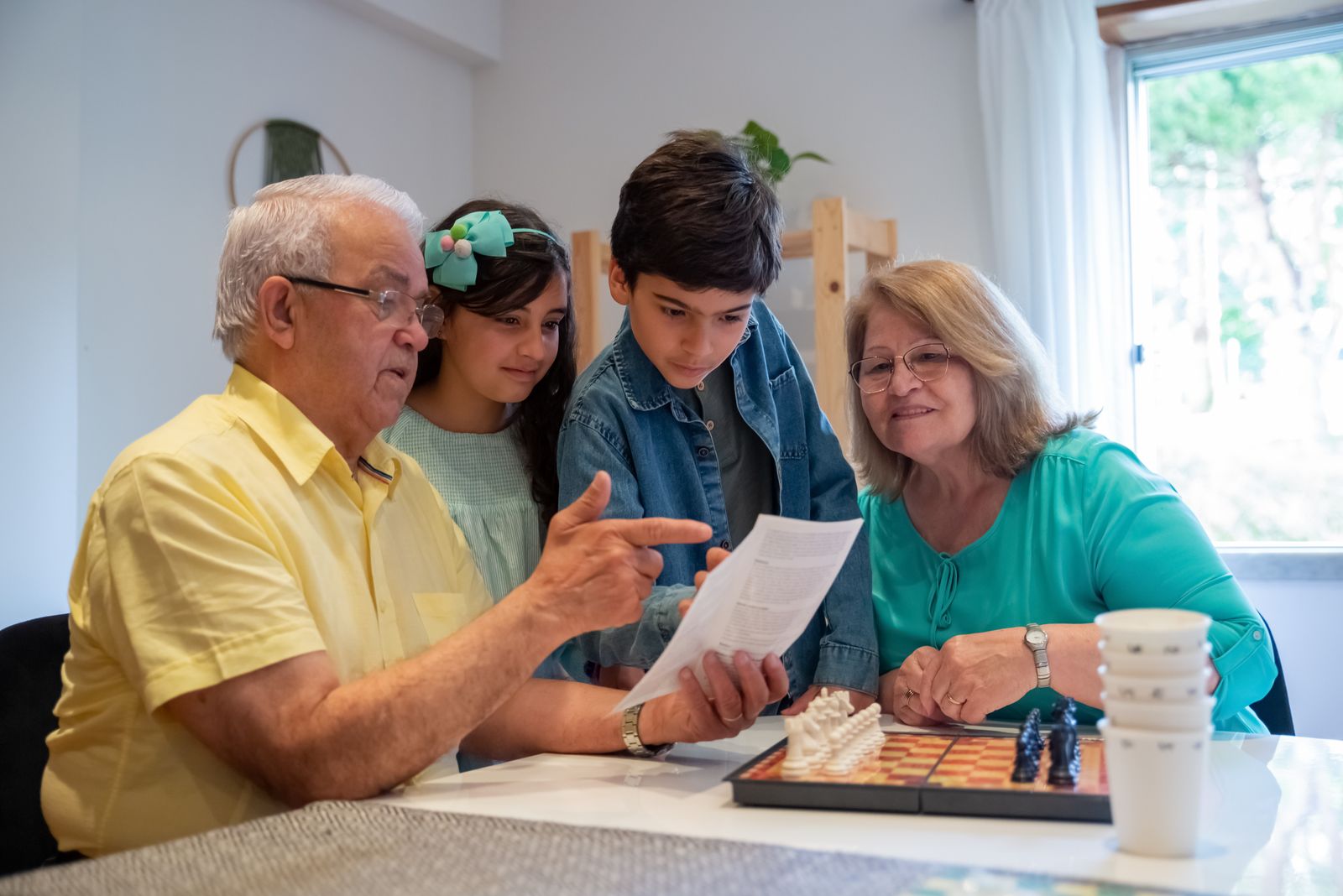
That structure isn’t automatically better for every household. If your crew genuinely enjoys friendly rivalry, a cooperative game can feel oddly flat — there’s no bragging rights at the end. But for mixed-age groups, for kids who take losing hard, or for anyone who’s tired of a game night ending in tears, cooperative play solves a real problem that party games and classic board games don’t.
The Cost-Per-Player, Per-Half-Hour Value Table
Every one of these games lists a price, a maximum player count, and a stated playtime on the box or the publisher’s product page. Nobody combines those three numbers, so we did the math ourselves: cost per player is price divided by the maximum player count printed on the box, and cost per player, per 30 minutes normalizes that figure against the publisher’s stated playtime, so a $40 game that fills a 60-minute evening for four people isn’t unfairly compared to a $13 game that’s over in 25 minutes for two.
| Game | Approx. Price | Max Players (box) | Cost / Player | Stated Playtime | Cost / Player, Per 30 Min |
|---|---|---|---|---|---|
| Hanabi | $12.99 | 5 | $2.60 | 25 min | $3.12 |
| Mysterium | ~$40 | 7 | $5.71 | 42 min | $4.08 |
| The Crew: Quest for Planet Nine | $15.95 | 5 | $3.19 | 20 min | $4.79 |
| Pandemic | $39.99 | 4 | $10.00 | 60 min | $5.00 |
| Just One | $24.99 | 7 | $3.57 | 20 min | $5.35 |
| Forbidden Island | $21.99 | 4 | $5.50 | 30 min | $5.50 |
| Outfoxed! | $15.99 | 4 | $4.00 | 20 min | $6.00 |
The math, spelled out: Hanabi at $12.99 ÷ 5 players = $2.60 per player; over a 25-minute round, that’s $2.60 ÷ (25/30) = $3.12 per player per half hour — the best figure on this list. Pandemic at $39.99 ÷ 4 players = $10.00 per player; across a 60-minute session that’s $10.00 ÷ (60/30) = $5.00. Outfoxed! comes out worst on this metric ($6.00) purely because it caps out at 4 players and 20 minutes — not because it’s a worse game. A short, small-group game will always look “less efficient” on a per-player basis than a longer one built for a full table, so read this table as a value lens, not a quality ranking.
Must-Haves vs. Nice-to-Haves in a Cooperative Board Game
Before comparing individual titles, it’s worth separating what actually matters from what’s just a bonus feature.
- Must-have: rules a new player can learn in under 10 minutes. Every game below can be taught from the box in one read-through; none require a rules video to get a first game going.
- Must-have: genuine replayability. Pandemic ships with three official difficulty settings (Introductory, Standard, and Heroic, set by using 4, 5, or 6 Epidemic cards) and seven distinct role cards, per the publisher’s rulebook. Forbidden Island uses a 9-level water meter and six adventurer roles, so the difficulty and starting positions change every session. The Crew: The Quest for Planet Nine bakes in 50 numbered missions of escalating difficulty, per the publisher.
- Nice-to-have: app-assisted play. None of these seven require a companion app — that’s deliberate on our part. App-driven cooperative games (a growing trend in the hobby) add replayability but also add a dependency: if the app stops being maintained, the game stops working as designed.
- Nice-to-have: expansions. Pandemic has the deepest expansion catalog (On the Brink, In the Lab, State of Emergency, and more), Mysterium has two expansions (Hidden Signs and Secrets & Lies), and Forbidden Island’s sibling games (Forbidden Desert, Forbidden Sky) function as thematic expansions in spirit. The Crew, Hanabi, Outfoxed!, and Just One are largely complete as standalone boxes.
The Honest Dealbreaker: Alpha-Player Syndrome
Cooperative games have one well-documented failure mode that party games don’t: one confident player telling everyone else exactly what to do, turning a group game into a spectator sport for everyone else. Board game reviewers and forum communities refer to this as “alpha-player” or “quarterbacking” behavior, and Pandemic is the most commonly cited example of it — its shared information (everyone can see the whole board and every hand) makes it easy for one strategic-minded player to dictate every move.
Some of these games are structurally resistant to that problem, and some aren’t:
- Hanabi is nearly alpha-player-proof by design: you can’t see your own hand, only everyone else’s, so no single player can ever have full information to dictate the group’s strategy.
- The Crew builds in a hard limit on communication (each player may reveal only one card per round, with a token showing whether it’s their highest, lowest, or only card of a suit), which structurally prevents one player from just announcing the plan.
- Pandemic and Forbidden Island are the most exposed to quarterbacking because all information is public and any player can suggest a full plan for everyone’s turn. Families who’ve had this problem before should assign one house rule up front: each player decides their own move on their own turn, full stop.
- Mysterium and Outfoxed! sidestep it differently — Mysterium’s ghost player physically cannot speak, which limits their control, though a dominant “medium” can still steer the guessing discussion; Outfoxed! is short and simple enough that a parent playing along tends to guide rather than dominate.
This isn’t a reason to avoid Pandemic — it’s simply the tradeoff for its deeper strategic layer. But if your group has one strong-willed strategist, weight that fact into the pick.
The 7 Best Cooperative Board Games for Family Game Night, Reviewed
Here’s the breakdown on each pick, including who it’s actually best for and where it falls short.
1. Forbidden Island — Best Overall / Best Gateway Game
Best for: ages 10+, 2-4 players, first-time cooperative-game families. Price: approximately $22, per Cardhaus’s current listing.
Designed by Matt Leacock (who also designed Pandemic) and published by Gamewright in 2010, Forbidden Island has players retrieving four treasures from a sinking island before the whole map disappears underwater. The board is built from 24 tiles that flood and vanish over the course of play, so the map — and the difficulty — is different nearly every game. It won the Golden Geek Award for Best Children’s Board Game and a Mensa Select award in 2010.
- Pros: 30-minute playtime keeps it from overstaying its welcome; adjustable 9-level water meter scales difficulty for new or experienced groups; simple enough to teach in five minutes.
- Cons: at higher difficulty settings, one confident player can start calling every move; six roles are enough to add variety but not endless.
2. Pandemic — Best for a “Real” Hobby-Game Feel
Best for: ages 8+, 2-4 players, families who want a deeper strategic challenge. Price: approximately $40, per Game Nerdz’s current listing (frequently discounted to the high $20s to low $30s on Amazon).
Matt Leacock’s 2008 original has reportedly sold around two million copies and was a 2009 Golden Geek Best Family Board Game winner and Spiel des Jahres nominee. Players take on roles like Medic, Scientist, or Dispatcher and race to discover cures for four diseases before outbreaks cascade out of control. It’s the deepest strategic game on this list, and it shows in the box: 45-60 minutes of playtime per the publisher’s listing, and rules with more moving parts than the other picks here.
- Pros: genuine strategic depth; seven roles and three official difficulty settings keep it fresh for dozens of plays; a large expansion catalog for households that get hooked.
- Cons: the most alpha-player-prone game on this list, since all information is public; the 45-60 minute runtime is long for younger kids; ages 8+ is the publisher’s floor, but the disease-outbreak theme and rules complexity play best for 10 and up.
3. Hanabi — Best Value Per Player
Best for: ages 8+, 2-5 players, travel and small-footprint game nights. Price: approximately $13, per Game Nerdz’s listing.
Designed by Antoine Bauza and published in 2010, Hanabi won the 2013 Spiel des Jahres (Germany’s top board game award). The twist: you hold your cards facing away from yourself, so you can see everyone else’s hand but not your own, and the group must build a simulated fireworks display in the correct color-and-number sequence using only limited hint tokens to communicate. It’s a small deck of cards in a small box, and per our value table above, it’s the best per-player, per-half-hour value in this roundup.
- Pros: cheapest entry point on this list; the hidden-hand mechanic makes alpha-player domination almost impossible; fits in a coat pocket for travel.
- Cons: the abstract fireworks theme won’t grab kids the way a “sinking island” or “ghost mystery” will; the communication rules take a round or two to click for brand-new players.
4. The Crew: The Quest for Planet Nine — Best Escalating-Difficulty Format
Best for: ages 10+, 3-5 players, families who like a built-in progression to work through. Price: approximately $16, per Board Game Bliss’s current listing.
Designed by Thomas Sing and published by Thames & Kosmos in 2019, The Crew won the 2020 Kennerspiel des Jahres (Germany’s “connoisseur game of the year” award) and the American Tabletop Award for Best Casual Game. It’s a cooperative trick-taking card game — think a stripped-down version of Bridge or Spades — where players must win specific tricks assigned by task cards, with communication limited to revealing a single card per round. The game includes 50 numbered missions of increasing difficulty, per the publisher, so a group can work through the whole campaign like a puzzle book.
- Pros: the built-in communication limit largely designs out alpha-player dominance; 50 missions provide real long-term replay value for a $16 box; short, punchy 20-minute rounds.
- Cons: trick-taking card games are a genre some families have never played, so there’s a learning curve; the missions get genuinely hard by the back half of the campaign, which can frustrate younger players.
5. Mysterium — Best for Big Groups (Up to 7 Players)
Best for: ages 10+, 2-7 players, family gatherings with more than four people at the table. Price: approximately $40-45, depending on retailer and edition.
Designed by Oleksandr Nevskiy and Oleg Sidorenko and published by Libellud (an Asmodee studio) in 2015, Mysterium won BoardGameGeek’s 2015 Golden Geek Award for Best Artwork and Presentation. One player takes on the silent role of a ghost, communicating only through surreal illustrated vision cards to help the other players — the “mediums” — identify a suspect, location, and weapon before time runs out, per the publisher’s stated 42-minute playtime.
- Pros: supports up to 7 players, more than any other pick here, making it the natural choice for extended-family visits; the artwork genuinely carries the game and appeals to imaginative kids; the ghost’s forced silence limits one specific kind of alpha-player behavior.
- Cons: highest price point on this list; a dominant “medium” can still steer the group’s guesses even though the ghost can’t talk; interpreting abstract art is a skill some players find frustrating rather than fun.
6. Outfoxed! — Best for Kids Under 8
Best for: ages 5+, 2-4 players, the youngest kids at the table. Price: approximately $16.
Published by Gamewright, Outfoxed! is a “whodunit” deduction game where players use a reusable scratch-off detective pad to eliminate suspects and catch the pie-thieving fox before he escapes, in a stated 20-minute playtime per the publisher’s product page. It’s the simplest ruleset in this roundup by a wide margin, which is exactly the point — it’s built for kids who are too young for Forbidden Island’s tile-flooding rules or Pandemic’s role cards.
- Pros: the lowest age floor on this list; reusable scratch-off pad means no consumable parts to run out of; a genuinely short 20-minute playtime that matches young attention spans.
- Cons: the deduction gets solved quickly by adults, so it can feel like an adult is “playing for” the group unless a parent deliberately holds back; it doesn’t have the replay depth to stay interesting much past age 8 or 9.
7. Just One — Best Party-Style Pick for Mixed-Age Crowds
Best for: ages 8+, 3-7 players, big mixed-age gatherings. Price: approximately $25, per Asmodee’s official store listing.
Designed by Ludovic Roudy and Bruno Sautter and published by Repos Production (an Asmodee studio) in 2018, Just One won the 2019 Spiel des Jahres. One player guesses a secret word from one-word clues that every other player writes down simultaneously and in secret — any duplicate clues get removed before the guesser sees them, which keeps everyone honest and engaged every single round, with a playtime the publisher lists at 20 minutes or less per session.
- Pros: scales up to 7 players, which most party games at this price point don’t; simultaneous, secret clue-writing means no single player can dominate the round; extremely low rules overhead for a mixed-age extended-family table.
- Cons: it’s more of a party word game than a strategic cooperative game, so it can feel repetitive after several rounds in one sitting; younger kids under 8 often struggle to write useful one-word clues.
How to Choose Between These Cooperative Board Games
Start with your youngest regular player, not your most enthusiastic one. If a 5- to 7-year-old is at the table every week, Outfoxed! or Hanabi (with help) will get more actual play than Pandemic ever will. If your group tops out around four adults and teens who want a real strategic puzzle, Pandemic or The Crew reward the investment. If the guest list swells past four for holidays, Mysterium and Just One are the only two picks here built to comfortably seat up to seven.
These pair naturally with other family entertainment picks for a full game-night rotation. If your group also likes to compete rather than cooperate sometimes, our guide to the best lawn games for family gatherings covers the outdoor, head-to-head side of the equation. Households building out a broader game shelf might also look at our best STEM coding robots for kids roundup for screen-free options on non-game-night days, and adults who want their own tabletop hobby corner should see our best LEGO sets for adults guide.
Frequently Asked Questions
What makes a board game “cooperative” instead of competitive?
In a cooperative board game, every player works toward one shared win or loss condition instead of competing against each other. The “opponent” is a built-in game system — a spreading disease, a rising flood, a ticking clock — rather than another player at the table.
What’s the best cooperative board game for young kids?
Outfoxed! has the lowest age floor of the picks in this roundup, with a publisher-stated minimum age of 5 and a 20-minute playtime built for short attention spans. Hanabi (ages 8+) and Forbidden Island (ages 10+, though many families play younger with help) are good next steps as kids grow.
Are cooperative board games less fun because nobody “wins” individually?
Not for most families — that’s actually the appeal. Nobody gets eliminated early, and a shared loss tends to land softer than an individual one, especially with kids. Groups that specifically enjoy head-to-head rivalry may find cooperative games feel flatter, since there’s no personal bragging rights at the end.
What is “alpha-player syndrome” and how do you avoid it?
It’s when one confident player effectively tells everyone else what to do on their turn, turning a group game into a spectator experience for the rest of the table. Games with hidden information (Hanabi) or strict communication limits (The Crew) design around it structurally. In games with fully public information (Pandemic, Forbidden Island), the simplest fix is a house rule: each player decides their own move on their own turn.
Can these cooperative board games be played with just two people?
Pandemic, Forbidden Island, Hanabi, and Mysterium all list a 2-player minimum on the box. The Crew: The Quest for Planet Nine and Just One are both designed with a minimum of three players, so they’re not the right pick for a two-person game night.
Do any of these games require a smartphone app to play?
No. All seven picks in this roundup are fully playable with the physical components in the box, with no companion app required, which we treated as a requirement rather than a nice-to-have when selecting titles.
How We Researched This Guide
We did not physically test these games ourselves for this guide. Instead, we cross-referenced each publisher’s official product listings and rulebooks for player counts, playtimes, and minimum ages; verified awards and recognition (Spiel des Jahres, Kennerspiel des Jahres, and Golden Geek Awards) against the awarding organizations’ own records; and read multiple independent reviews and community discussions to confirm recurring feedback patterns, such as the alpha-player critique of Pandemic and Forbidden Island. Every price cited reflects a specific retailer listing checked at the time of publication, named in-line where used. Our full process is outlined on our editorial standards page.
Prices are approximate, current as of publication, and change frequently — confirm the latest price with the retailer before buying.
Published July 2026. Diversify Media.
