Some links on our site may earn us a commission at no extra cost to you. Learn more.
Published August 2026 · Updated August 2026
The short answer: you need an entryway storage bench if two or more people funnel through the same door and shoes pile up faster than anyone puts them away, or if you want somewhere to actually sit while pulling boots on. If you live alone, have open wall space, and rarely have more than two or three pairs of shoes at the door at once, a few hooks and a boot tray solve the clutter for a fraction of the price and zero floor footprint. Below, three quick questions help you sort yourself into one camp or the other, then five real entryway storage bench picks follow for the households that land in “get a bench.”
At a glance — the five picks below
- Small apartment entry: VASAGLE 4-in-1 Hall Tree with Bench and Shoe Storage — ~$50
- Family mudroom: Prepac 24-Pair Shoe Storage Cubby Bench — ~$188–$200
- Renters (no wall mounting): Costway 8-Cubby Shoe Bench — ~$55–$70
- Daily adult seating: Simplihome Warm Shaker Entryway Storage Bench — ~$291
- Budget pick: Sauder North Avenue Storage Bench — ~$74
An entryway storage bench only earns its footprint if it solves a problem hooks and a tray can’t. Before you shop, it’s worth answering a few honest questions about your door, your household, and how much floor space you’re willing to give up — because the wrong bench in a tight entry just becomes one more thing to walk around.
How much floor space do you have by the door?
Measure the actual clear width and depth by your door before you shop, not the wall space — a bench needs room for the door to swing and for people to walk past it without turning sideways. The five benches in this guide range from 2.6 to 6.5 square feet of floor footprint once you multiply width by depth, so a narrow apartment entry and a wide mudroom hallway need very different sizes, not just different styles.
If your clear floor space is under roughly 3 square feet, a wall-mounted hook rail and a slim boot tray cost under $40 combined and take up no floor space at all — that’s often the better call in a studio or a narrow hallway entry, and it pairs well with the modular, space-saving storage apartment dwellers already lean on elsewhere in the unit.
How many people and pairs of shoes pass through that door every day?
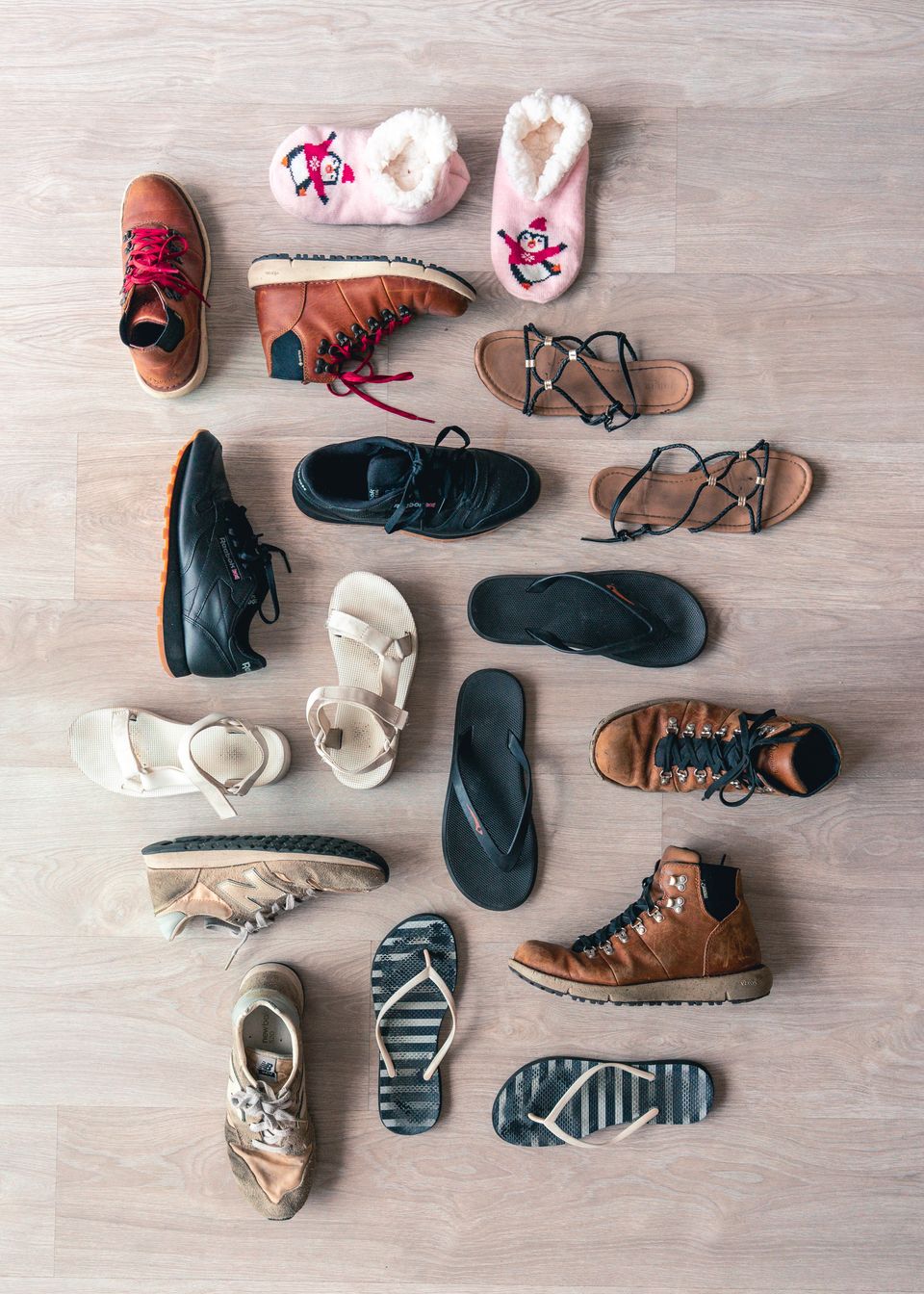
One person’s shoes rarely need more than a tray. A household of three or four, especially with school-age kids or a dog-walking routine, generates a rotating pile of sneakers, boots, and sandals that a tray can’t contain — that’s the scenario a cubby bench with 8 to 24 dedicated slots, like Prepac’s or Costway’s, is built to handle.
Count the pairs of shoes that land by your door on a normal weekday, not a clean-house day. If it’s consistently more than four or five pairs, a bench with individual cubbies keeps them upright and separated instead of turning into a shoe pile that just moves from the tray to the floor next to it.
Do you have wall space (or a landlord who allows hooks)?
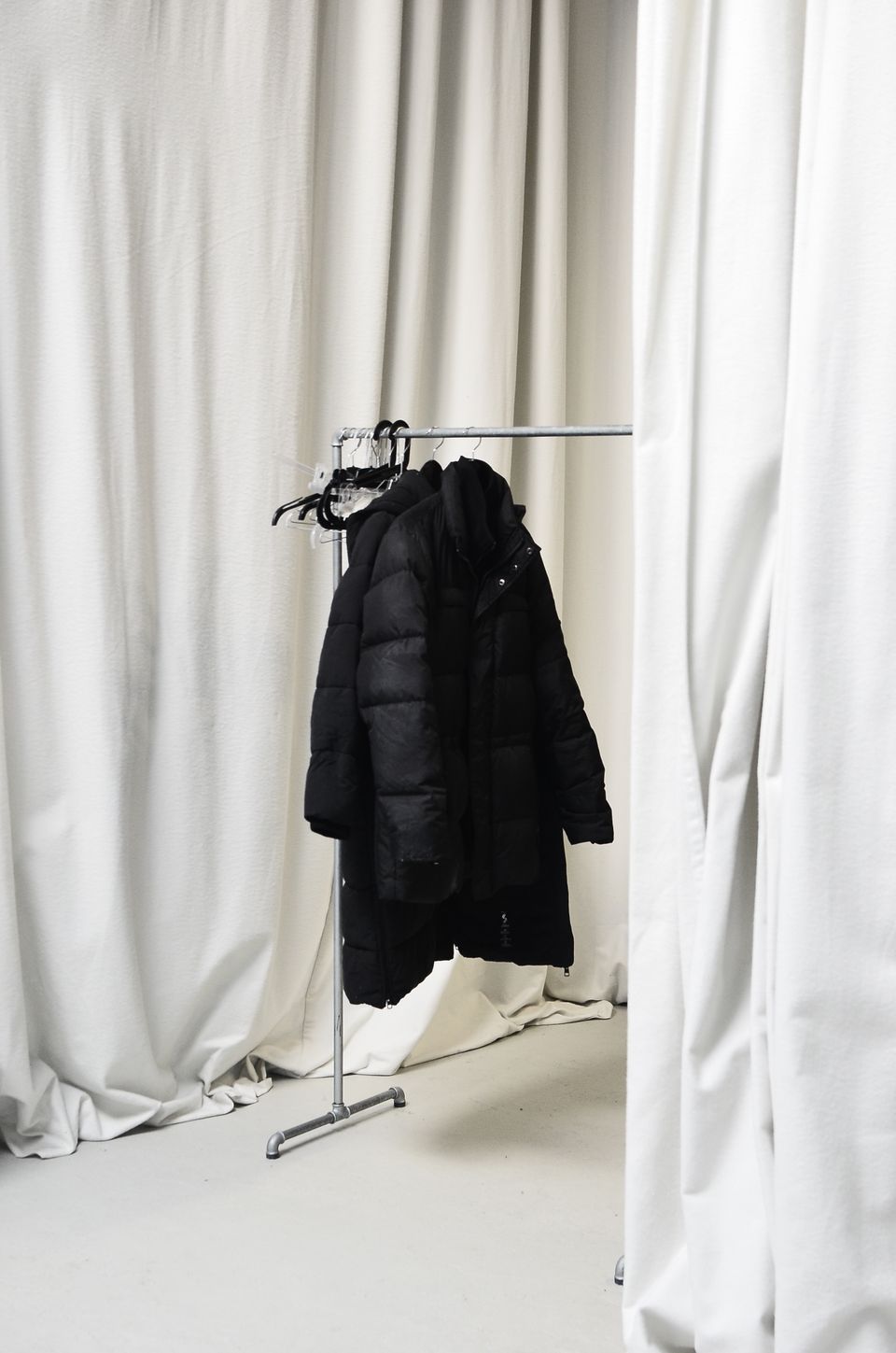
Hooks need a stretch of open wall, screws (or a rated adhesive strip if you rent), and a household that will consistently hang coats instead of draping them over a chair. If that describes your entry, coats are solved without furniture. If your wall space is broken up by a mirror, a light switch, or a narrow hallway with no clear run of drywall, a hall-tree-style bench that bundles hooks into the same footprint as the seat — like VASAGLE’s 4-in-1 — solves both problems at once.
So, will hooks and a tray solve it?
For a lot of households, yes. A wall hook rail plus a boot tray costs $20–$40, takes an afternoon to install, and needs zero floor space — the right call if you live alone or with one other person, have open wall space, and rarely stack up more than a couple pairs of shoes at the door.
- Skip the bench if: one or two people use the door, you have open wall space, and shoes rarely pile past two or three pairs.
- Get a bench if: three or more people (or a shoe-heavy household) share the door, you want somewhere to sit while putting shoes on, or your wall space is too broken up for a hook rail to work.
The picks, by use case
Everything below is a real, currently-sold entryway storage bench — no fictional composites. Prices, dimensions, and weight ratings are pulled from manufacturer and retailer listings, and each stat is sourced where it appears.
Best for a small apartment entry: VASAGLE 4-in-1 Hall Tree with Bench and Shoe Storage
VASAGLE’s 4-in-1 hall tree packs a bench seat, an open shoe rack, 9 removable hooks, and a hanging rod into a single 28.3-by-13.3-inch footprint, according to the product listing on Walmart. That’s about 2.6 square feet of floor space for four functions, which makes it the pick for a narrow apartment entry where a separate bench and hook rail wouldn’t both fit.
The steel frame and particleboard construction carries a 4.7-out-of-5 rating across 84 buyer ratings on that same listing, and the bench seat is rated to hold up to 198 pounds. That’s on the lighter end for adult seating — fine for one person perching to tie shoes, less reassuring for two people sitting at once.
- Pros: smallest footprint in this guide, hooks and shoe storage built in, no separate wall hardware needed, budget-friendly at roughly $50.
- Cons: open shoe rack (not enclosed cubbies) so shoes can slide, 198-lb bench rating is lower than the other picks, particleboard shows wear faster than solid wood.
Best for a family mudroom: Prepac 24-Pair Shoe Storage Cubby Bench
At 60 inches wide, Prepac’s cubby bench (model BSS-6020) is built for a household that outgrew a tray months ago. It holds 24 pairs of shoes in individual 6.75-by-4.75-by-14-inch cubbies and carries a 200-pound weight rating for the bench top, per the spec sheet on Home Depot’s product page. Home Depot lists it at 4.5 stars across 187 reviews; a similar listing on Walmart shows 4.4 stars across 121 reviews, with buyers consistently citing the amount of shoes it swallows as the main draw.
It ships flat and assembles in about 45 minutes with basic hand tools, according to Home Depot’s listing, and the laminated engineered-wood construction is rated CARB-2 compliant with a 5-year limited warranty. It doesn’t include hooks, so budget for a separate wall rail or an over-the-door option — pairing furniture this size with a rail is still cheaper than a full hall tree at this width.
- Pros: 24 individual cubbies keep shoes upright and separated, 5-year warranty, strong review volume with a consistent 4.4–4.5-star average.
- Cons: no built-in hooks, 6.5-square-foot footprint needs a genuinely wide mudroom or hallway, laminate finish (not solid wood).
If your mudroom also swallows seasonal gear like boots, sports equipment, or bins that don’t fit inside the bench, our garage storage and shelving picks for a small garage cover where that overflow can go instead of stacking up next to the bench.
Best for renters who don’t want to mount anything: Costway 8-Cubby Shoe Bench
Costway’s 8-cubby bench is compact — 40 by 12 inches, about 3.3 square feet of floor space, per the Walmart listing — and it’s entirely freestanding, so there’s nothing to anchor to drywall and nothing to patch when you move. It’s listed at $54.99 in black and $69.99 in white or grey on that same page.
The standout number is weight capacity: 500 pounds, per the manufacturer spec on the listing — more than double the Prepac and VASAGLE picks above at a fraction of the price. That listing is new enough that it only shows a single review as of this writing, so treat the rating itself as unverified and lean on the published spec and material description (reinforced engineered wood with non-slip feet) instead.
- Pros: highest weight capacity in this guide relative to price, small footprint, fully freestanding — no wall hardware, no landlord approval needed.
- Cons: only 8 cubbies (fine for one or two people, tight for a family), very limited review history to verify long-term durability, no hooks.
Best for daily adult seating: Simplihome Warm Shaker Entryway Storage Bench
If you want a bench built to be sat on every day rather than a shoe organizer with a lid, Simplihome’s 44-inch Warm Shaker bench is solid wood — not laminate or particleboard — and carries a 265-pound weight rating, the highest of any pick here, per the product page on simpli-home.com. It’s listed at $291, marked down from a $359 list price at the time of research, and comes with a 1-year warranty.
Instead of shoe cubbies, it has three storage compartments with adjustable shelves under a lift-up seat — better for gloves, leashes, and mail than for keeping individual shoe pairs separated. It’s the pick for a household that already has (or is adding) wall hooks and wants the seating and general storage to actually hold up to two adults sitting down at once.
- Pros: real solid wood, highest published weight rating in this guide, adjustable interior shelves, 1-year warranty.
- Cons: priciest pick here, no dedicated shoe cubbies, no hooks — pair it with a wall rail, requires full assembly.
Best budget pick: Sauder North Avenue Storage Bench
Sauder’s North Avenue bench is the cheapest pick in this guide at $74.15 for the Sindoori Mango finish on Walmart, with 4.5 stars across 37 reviews on that listing. It’s a compact 35.43-by-15.51-inch flip-top bench with a lower grate-style shelf for extra storage, built from engineered wood with a black metal frame.
Here’s the honest catch: none of the retailer or manufacturer listings we checked publish a sitting weight capacity for this bench, which is worth flagging rather than glossing over — a similar gap shows up with several budget hall trees. Home Styles’ Bedford Hall Tree, for example, collects three reviews on its Kohl’s product page, all one star, with buyers reporting the pre-drilled holes don’t line up and assembly is a genuine fight. That’s the pattern worth checking before buying any budget hall tree with a mirror or panel bolted to particleboard: an unpublished weight rating or a cluster of assembly complaints is a real dealbreaker, not a nitpick.
- Pros: lowest price in this guide, compact footprint, hidden storage plus a lower shelf, solid 4.5-star rating.
- Cons: no published weight capacity for the seat, no hooks or shoe cubbies, best treated as a storage box you can perch on rather than daily two-person seating.
How much floor space do you give up for how much storage?
None of the five picks above publish a footprint-to-storage ratio, so we calculated one from their own listed dimensions — floor space consumed (width × depth, converted to square feet) against dedicated shoe cubbies and published weight capacity. It’s the one number that shows whether a bench is earning its square footage or just taking up room.
| Bench | Footprint (sq ft) | Shoe cubbies | Weight capacity | Sq ft per cubby | Approx. price |
|---|---|---|---|---|---|
| VASAGLE 4-in-1 Hall Tree | 2.61 | Open rack (no walled cubbies) | 198 lb | N/A | ~$50 |
| Costway 8-Cubby Shoe Bench | 3.33 | 8 | 500 lb | 0.42 | ~$55–$70 |
| Sauder North Avenue Storage Bench | 3.82 | 0 (lid + lower shelf) | Not published | N/A | ~$74 |
| Simplihome Warm Shaker Bench | 5.53 | 0 (3 compartments) | 265 lb | N/A | ~$291 |
| Prepac 24-Pair Cubby Bench | 6.46 | 24 | 200 lb | 0.27 | ~$188–$200 |
Two things stand out. First, Prepac packs the most storage into its floor space by a wide margin — 0.27 square feet per shoe cubby versus 0.42 for the smaller Costway bench — which is exactly what you’d expect from the widest unit here, but it only pays off if you actually have 6.5 square feet to give up. Second, weight capacity doesn’t track with price at all: the $55–$70 Costway bench is rated for more than double the weight of the $291 Simplihome bench, because it’s engineered specifically as a shoe-storage box rather than long-duration two-adult seating.
Which features matter — and which are just nice to have?
Across the five picks and the reviews we checked for each, a few features separate a bench that holds up from one that doesn’t — and a few others are just pleasant extras.
- Must-have — a published weight rating of 250 lb or more if adults will sit on it daily. Only Simplihome’s Warm Shaker (265 lb) clears that bar in this guide; Prepac and VASAGLE sit at 198–200 lb, which is fine for perching but not for two people at once.
- Must-have — sealed or laminated wood, not raw particleboard, anywhere boots might drip. Prepac’s laminate finish and Costway’s reinforced engineered wood both hold up to occasional wet boots; unsealed particleboard edges swell and delaminate over repeated exposure.
- Must-have — individual, walled cubbies if the actual goal is keeping shoes separated. An open rack or shelf, like VASAGLE’s, still lets shoes slide and pile even though it technically counts as “storage.”
- Nice-to-have — hooks built into the bench. It saves buying a separate rail, but a $15 wall hook strip does the same job for less if you have wall space to spare.
- Nice-to-have — a lid or drawers instead of open cubbies. Hides clutter visually but makes grabbing a specific pair slower than an open cubby does.
Frequently asked questions
Do I really need an entryway storage bench, or will hooks and a tray work?
If you live alone or with one other person, have wall space near the door, and don’t stockpile more than two or three pairs of shoes at the entry, wall hooks and a boot tray solve the problem for under $40 and zero floor footprint. A bench earns its footprint when two or more people funnel through the same door daily, when shoes pile up faster than they get put away, or when you want somewhere to actually sit down and put shoes on.
What weight capacity should an entryway bench have?
Look for at least 250 pounds if adults will sit on it regularly. Some engineered-wood benches, like Sauder’s North Avenue, don’t publish a sitting weight rating at all, which is itself a signal to treat them as storage with a lid rather than daily seating.
Are engineered-wood or particleboard benches sturdy enough for wet boots?
Laminated engineered wood with a sealed finish, like Prepac’s and Costway’s cubby benches, tolerates occasional wet boots fine. Unsealed particleboard edges swell and delaminate if boots sit dripping on them regularly, so a boot tray inside or under the bench is worth keeping regardless of which bench you buy.
How much does an entryway storage bench cost?
Real, currently-sold entryway storage benches with cubbies or hooks run roughly $50 to $300, based on the retailer listings checked for this guide. Compact steel-frame combo units start around $50, mid-size cubby benches land between $70 and $200, and solid-wood benches rated for two adults run $250 to $300.
Can I add hooks or cubbies to a plain storage bench later?
Yes. A plain bench like Sauder’s North Avenue or Simplihome’s Warm Shaker pairs easily with a separate wall-mounted hook rail, which is often cheaper than buying an all-in-one hall tree if you already own (or prefer) a bench without built-in hooks.
How we researched this guide
We did not physically test the benches in this guide. Instead, we cross-checked manufacturer and retailer spec sheets — dimensions, weight capacity, and materials — against verified buyer reviews on Amazon, Walmart, Home Depot, and Kohl’s, looking for recurring complaints like misaligned hardware or particleboard swelling rather than one-off gripes, and we noted where a spec (like a weight rating) simply isn’t published anywhere. Prices are approximate, current as of publication, and change frequently — confirm the latest price with the retailer before buying. Read more about how we vet picks in our editorial standards.
For more entryway-adjacent storage, browse our Organization & Storage coverage, including under-bed storage containers for off-season boots and coats that don’t need to live by the door year-round.