Some links on our site may earn us a commission at no extra cost to you. Learn more.
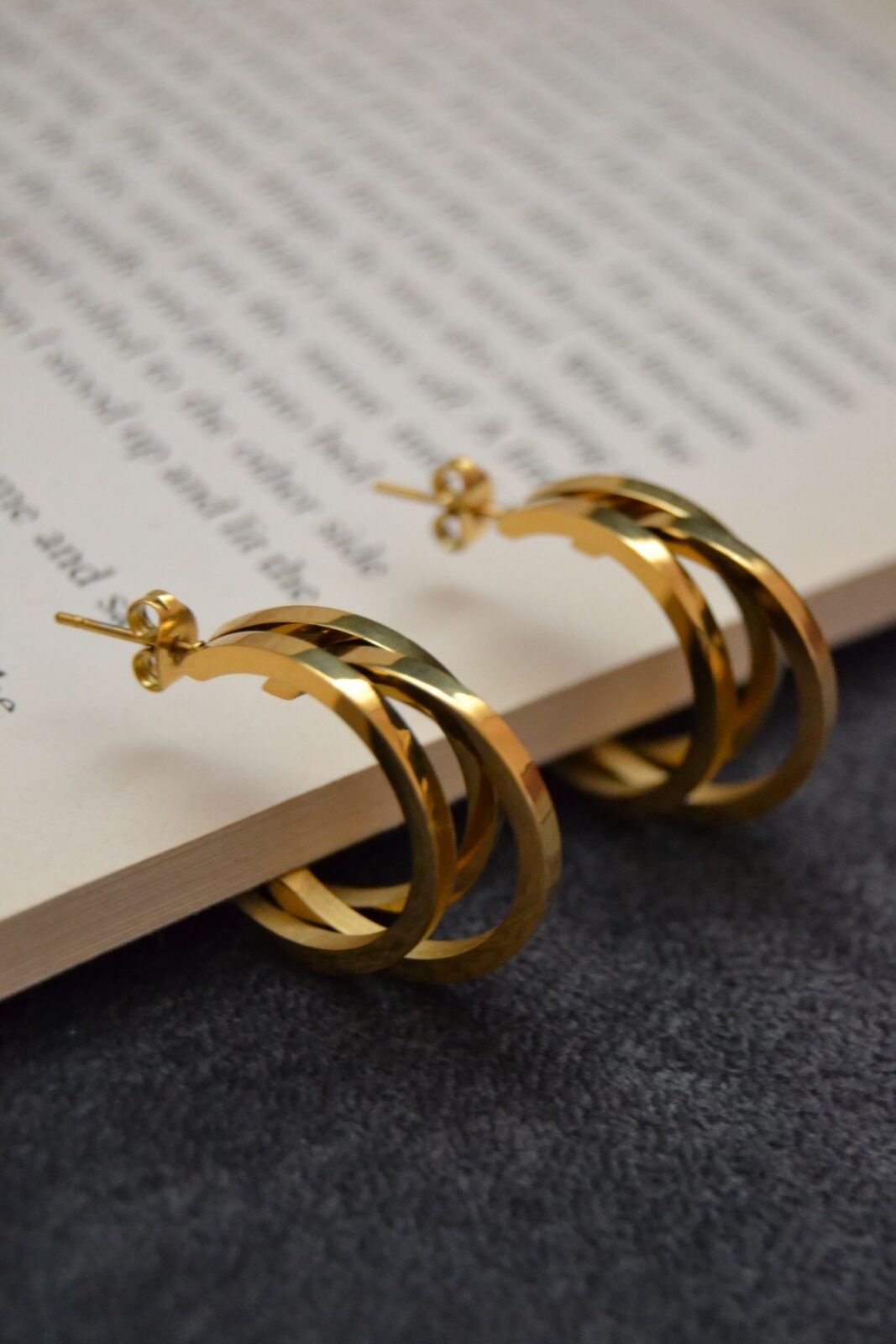
Short answer: if your ears itch, swell, or turn green after a few hours in cheap studs, the fix isn’t “buy nicer-looking jewelry” — it’s switching metals entirely. The best hypoallergenic earrings for sensitive ears are made from implant-grade titanium, niobium, or solid 14k+ gold, because those metals contain no detectable nickel and don’t corrode against skin the way plated brass or low-karat alloys do. Below we cover six real, currently sold options across a $15–$234 price range, organized by which kind of sensitive-ear situation each one solves best.
Quick Picks: 6 Hypoallergenic Earrings Worth Your Ear Real Estate
Skip straight to the pick that matches your situation. Full breakdowns, pros/cons, and pricing are further down.
- Most reactive/newly pierced ears: Blomdahl Pure Medical-Grade Titanium Studs — ~$38
- Best titanium hoops for daily wear: for rebel skin Implant-Grade Titanium Huggie Hoops — from ~$43
- Most colorful hypoallergenic option: Nonita Jewelry Niobium Stud Earrings — from ~$27
- Best solid-gold, buy-it-once pick: Automic Gold Solid 14k Screw-Back Earring — ~$234
- Best budget hoops: PAVOI 14K Gold-Plated Stainless Steel Chunky Hoops — ~$15
- Best certified nickel-free, everyday styles: Ana Luisa Nickel-Free Earrings — ~$50–$65
Jump to a Section
- Why do some earrings make ears itch, swell, or turn green?
- Does “hypoallergenic” on a label actually mean anything?
- Which metals are actually safe for sensitive ears?
- What does a hypoallergenic upgrade cost over time?
- The 6 best hypoallergenic earrings for sensitive ears
- Comparison at a glance
- How we researched this guide
- FAQ
Why Do Some Earrings Make Ears Itch, Swell, or Turn Green?
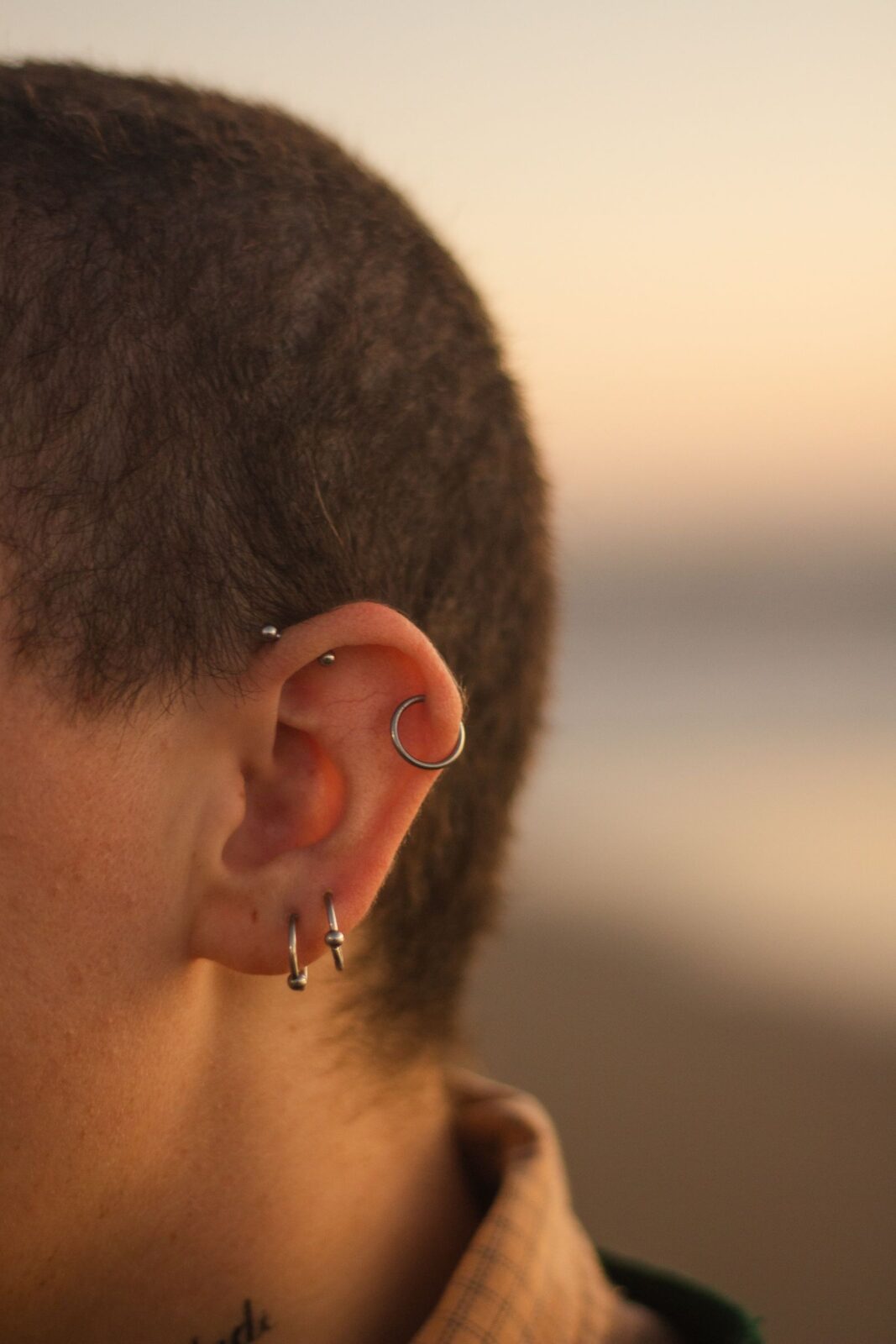
Most “ear allergies” are really a single, well-understood metal allergy: nickel. According to the American Academy of Dermatology (AAD), more than 18 percent of people in North America are allergic to nickel, and earrings are among the biggest sources of exposure because pierced skin sits in near-constant contact with the metal, often for years.
Nickel gets used as a cheap alloying metal in gold-filled, gold-plated, and “gold-tone” costume jewelry because it’s inexpensive and gives base metals strength. When sweat and skin oils slowly dissolve trace nickel out of the alloy, the immune system treats it as an irritant, producing the classic symptoms: redness, itching, flaking, or a swollen lobe. Green or black discoloration on skin is a separate, non-allergic reaction — it’s a byproduct of copper (common in brass and low-karat gold alloys) oxidizing against skin acids, and it can happen even to people without a true nickel allergy.
The practical fix is choosing metals that either contain no nickel at all (titanium, niobium) or that are dense and inert enough that little to nothing leaches out (solid 14k+ gold, implant-grade surgical steel). That’s the whole premise of this guide.
Does “Hypoallergenic” on a Label Actually Mean Anything?
Partially. In the U.S., “hypoallergenic” is not a regulated or independently verified term for jewelry the way, say, a drug claim would be — brands can print it on packaging without third-party testing. That said, it’s not meaningless: reputable brands generally use it to mean the piece is made from, or plated over, metals with no detectable nickel, and some (like Blomdahl and Ana Luisa) back it up with in-house nickel-release testing or ISO-certified manufacturing.
The honest caveat: hypoallergenic is not the same as allergy-proof. A small number of people react to cobalt, chromium, or even gold itself, and no single earring is guaranteed to be reaction-free for every ear. If you’ve had a severe reaction before, patch-testing a new metal on a small area first, or asking a dermatologist, is worth the extra step.
Which Metals Are Actually Safe for Sensitive Ears?
Not all “safe metals” are equally safe. Here’s our own side-by-side breakdown of the metals used in the six picks below, ranked from most to least inert against skin.
| Metal | Contains nickel? | Why it behaves this way | Best suited for |
|---|---|---|---|
| Titanium (implant-grade, G1/G23) | No | Forms a stable oxide layer on the surface that doesn’t react with sweat or skin oils | Extremely reactive skin, fresh piercings, daily wear |
| Niobium | No | Chemically similar to titanium; inert and non-reactive, and can be anodized for color without adding allergens | Reactive skin that also wants color variety |
| Solid 14k–18k gold | No (when genuinely nickel-free alloy) | High gold content leaves little room for reactive alloy metals; check that the alloy is stated nickel-free, since some gold alloys still use it | Long-term, buy-it-once wear |
| Implant-grade (316L/304) surgical steel | Trace amounts | Contains a small percentage of nickel bound tightly in the alloy; low risk for most people, but not zero for the already-sensitized | Moderate sensitivity, budget hoops and posts |
| Gold-plated brass or stainless base | Depends on base metal | Safe only as long as the plating is intact and the base metal underneath is itself nickel-free (stainless steel bases are generally fine; brass bases often aren’t) | Occasional wear, budget pieces — check the base metal |
This comparison is our own synthesis of publicly available metallurgical and dermatology information, not a lab analysis of the specific products below.
What Does a Hypoallergenic Upgrade Cost Over Time?
Cheap costume earrings feel like the budget option, but if they’re causing reactions, you’re likely replacing them every few months instead of buying once. We ran the numbers ourselves to see what that actually costs over a year.
Our own computation: assume a typical reactive costume-jewelry pair costs about $12 and gets tossed and replaced roughly every 3 months (4 pairs/year = $48/year, indefinitely). We amortized each hypoallergenic pick’s price over an assumed 3-year wear life for plated/coated pieces, or a 10-year wear life for solid gold (since gold doesn’t corrode or need re-plating). These are illustrative assumptions, not guarantees — actual lifespan depends on how the piece is worn and cared for.
| Option | Price | Assumed wear life | Cost per year (our estimate) |
|---|---|---|---|
| Recurring costume jewelry (baseline) | ~$12/pair | ~3 months per pair | ~$48/year, every year |
| PAVOI Chunky Hoops | ~$15.35 | 3 years | ~$5.12/year |
| Nonita Niobium Studs | ~$27 | 3 years | ~$9.00/year |
| Blomdahl Titanium Studs | ~$38 | 3 years | ~$12.67/year |
| for rebel skin Titanium Hoops | ~$43 | 3 years | ~$14.33/year |
| Ana Luisa Nickel-Free Earrings | ~$57.50 (avg) | 3 years | ~$19.17/year |
| Automic Gold Screw Earring | ~$234 | 10 years | ~$23.40/year |
Under these assumptions, every hypoallergenic option on this list works out cheaper per year than a cycle of replacement costume jewelry — and that’s before factoring in the actual discomfort of a reaction.
The 6 Best Hypoallergenic Earrings for Sensitive Ears
Each pick below solves a slightly different problem — freshly pierced ears, everyday hoops, color variety, a buy-it-once splurge, a tight budget, or a certified nickel-free everyday rotation. Prices and specs were verified at time of writing; always double-check current pricing before buying.
1. Blomdahl Pure Medical-Grade Titanium Studs — Best for Extremely Reactive or Newly Pierced Ears
Price: ~$38 · Material: Pure medical-grade titanium, some styles with a ceramic coating and prong- or bezel-set crystals
Blomdahl is a Swedish brand manufactured under ISO 13485 (a medical-device quality standard) with what the company describes as full production traceability. It’s one of the few earring brands piercing studios and dermatology-adjacent retailers commonly recommend specifically for freshly pierced or chronically reactive ears, which is a strong reviewer-consensus signal even without formal clinical claims.
- Must-have: Nickel-free, medical-grade titanium construction
- Nice-to-have: Simple ball and crystal stud styles that work for first piercings, not just fashion wear
- Dealbreaker: Design range is understated — not the pick if you want statement jewelry
- Best for: Newly pierced ears, chronic reactors, anyone who has struck out with every other metal
2. for rebel skin Implant-Grade Titanium Huggie Hoops — Best Titanium Hoops for Daily Wear
Price: from ~$43 · Material: G23 implant-grade titanium (ASTM F136)
for rebel skin is a small, titanium-focused independent jewelry seller whose entire catalog is built around G1 and G23 titanium — the same grade used in surgical implants. The huggie hoop is a snug, low-profile hoop style that sits close to the lobe, which makes it a comfortable everyday option instead of a special-occasion piece.
- Must-have: ASTM F136 implant-grade titanium, waterproof and tarnish-free
- Nice-to-have: Compact huggie shape that layers well with other piercings
- Dealbreaker: As an independent small-catalog seller, sizing and stock can vary by style
- Best for: Sensitive ears that want a hoop in daily rotation, not just studs
3. Nonita Jewelry Niobium Stud Earrings — Most Colorful Hypoallergenic Option
Price: from ~$27 · Material: Pure niobium posts, anodized for color
Niobium is chemically similar to titanium — biocompatible and nickel-free — but it can be anodized into a range of colors through an electrochemical process rather than a coating or dye, so the color doesn’t wear off in the way plating can. Nonita is a niobium-focused independent jewelry maker whose stud earrings are handmade to order.
- Must-have: Pure niobium construction, naturally nickel-free
- Nice-to-have: Anodized color options beyond the usual silver or gold tone
- Dealbreaker: Handmade, small-batch production means less availability at any given moment than mass-market brands
- Best for: Sensitive ears that still want variety beyond basic metal tones
4. Automic Gold Solid 14k Screw-Back Earring — Best Solid-Gold, Buy-It-Once Pick
Price: ~$234 · Material: Solid 14k gold (certified recycled), yellow, white, rose, or champagne
Automic Gold is a New York-based fine jewelry brand that works exclusively in solid gold rather than plated or filled pieces, and states its gold is certified recycled. Solid 14k gold’s high gold content leaves comparatively little room for reactive alloy metals, and unlike plating, there’s no surface layer to wear through over years of wear. The screw-back post is also a practical touch for anyone who has lost a butterfly-backed earring in their sleep.
- Must-have: Genuinely solid gold, not vermeil or plated, with a secure screw back
- Nice-to-have: Four gold-tone options and certified recycled sourcing
- Dealbreaker: The highest price on this list by a wide margin
- Best for: Anyone who wants to stop rebuying earrings entirely and treat this as a one-time purchase
5. PAVOI 14K Gold-Plated Stainless Steel Chunky Hoops — Best Budget Hypoallergenic Hoops
Price: ~$15.35 · Material: Stainless steel post and body, 14k gold-flash plating
PAVOI is a large, review-heavy accessible-fashion-jewelry brand, and this hoop style is listed as “hypoallergenic; nickel, lead, and cadmium free.” The important detail is what’s under the plating: stainless steel, not brass, which means even as the gold-flash finish wears with heavy use, the metal actually touching skin stays a lower-reactivity base rather than exposing a nickel-heavy alloy.
- Must-have: Stainless steel base under the gold plating, not brass
- Nice-to-have: Trend-forward chunky hoop styling at a low price
- Dealbreaker: Plating will visibly wear with heavy daily wear, water, or friction over time
- Best for: Budget shoppers and occasional wearers who don’t want to spend $40+ to test if a hoop irritates them
6. Ana Luisa Nickel-Free Earrings — Best Certified Nickel-Free Everyday Rotation
Price: ~$50–$65 · Material: Recycled sterling silver or stainless steel base, gold vermeil or plating
Ana Luisa is a direct-to-consumer jewelry brand made in the USA that states its nickel-free line is tested for nickel content piece by piece, and publicly explains the pink-solution spot test it uses for verification. That level of stated testing transparency is unusual among mid-market plated jewelry brands, most of which simply print “hypoallergenic” without explaining how they check it.
- Must-have: Stated nickel-content testing, not just a hypoallergenic label
- Nice-to-have: Wide range of everyday hoop and stud styles in the nickel-free collection
- Dealbreaker: Still a plated/vermeil finish on some styles, so it isn’t as permanent as solid gold or titanium
- Best for: Building a full everyday rotation without restricting yourself to one or two styles
Comparison at a Glance
| Pick | Metal | Price | Best for |
|---|---|---|---|
| Blomdahl Titanium Studs | Medical-grade titanium | ~$38 | Newly pierced / extremely reactive ears |
| for rebel skin Titanium Hoops | G23 implant-grade titanium | from ~$43 | Everyday hoop wear |
| Nonita Niobium Studs | Pure niobium, anodized | from ~$27 | Color variety |
| Automic Gold Screw Earring | Solid 14k recycled gold | ~$234 | Buy-it-once splurge |
| PAVOI Chunky Hoops | Stainless steel, gold-plated | ~$15.35 | Budget hoops |
| Ana Luisa Nickel-Free | Sterling silver/steel, vermeil | ~$50–$65 | Full everyday rotation |
How We Researched This Guide
We did not physically test these earrings. Instead, we synthesized publicly listed manufacturer specs (metal grade, certifications, pricing) with verified owner and reviewer consensus found across retailer listings and product pages, then cross-checked material claims against general dermatology and metallurgy sources like the American Academy of Dermatology. Our full approach, including how we handle affiliate relationships and corrections, is detailed in our editorial standards.
Prices are approximate, current as of publication, and change frequently — confirm the latest price with the retailer before buying.
Published: August 5, 2026 | Updated: August 5, 2026
Frequently Asked Questions
Is titanium or niobium better for sensitive ears?
Both are nickel-free and generally considered inert against skin, so neither has a meaningful safety edge over the other for most people. The practical difference is aesthetic: niobium can be anodized into colors, while titanium is typically left in its natural silver or given a coating.
Are gold-plated earrings ever okay for sensitive ears?
Sometimes, if the base metal under the plating is itself low-reactivity, like stainless steel. The risk is what happens once the plating wears thin from friction or water — if the base metal underneath contains nickel, exposure resumes. Check the base metal, not just the word “hypoallergenic” on the listing.
Is solid gold always hypoallergenic?
Not automatically. Higher-karat solid gold (14k and up) is generally low-reactivity because there’s less room in the alloy for other metals, but the specific alloy still matters — some gold alloys are strengthened with nickel. Look for solid gold that’s explicitly stated as nickel-free, as the picks in this guide are.
Why did my ears turn green even though the earrings weren’t cheap?
Green or black discoloration usually comes from copper oxidizing against skin acids and sweat, which is a chemical reaction rather than an allergic one. It shows up most in brass-based and lower-karat gold alloys, and it can happen to people without a true nickel allergy.
Can hypoallergenic earrings still cause a reaction?
Yes, for a small number of people. Hypoallergenic means low risk of the most common triggers (mainly nickel), not a guarantee against every possible metal sensitivity. If a reaction persists even in titanium or niobium, it’s worth discussing with a dermatologist rather than assuming any metal will work.
How long should hypoallergenic earrings last before I need to replace them?
Solid metals like titanium, niobium, and solid gold don’t have a built-in expiration — they can last indefinitely with normal care. Plated pieces (like budget gold-plated hoops) typically hold their finish for one to a few years of regular wear before the coating visibly thins, depending on how often they’re worn, worn in water, or rubbed against clothing and hair.
Do I need a dermatologist to confirm a nickel allergy before buying hypoallergenic earrings?
Not necessarily. If you already know cheap earrings irritate you, switching to titanium, niobium, or solid nickel-free gold is a reasonable first step on its own. A dermatologist visit is more useful if reactions continue even after switching metals, since that can point to a different or additional sensitivity.
Related Reading
For more jewelry buying guidance, browse our full Jewelry & Accessories coverage. If you’re building out an everyday jewelry rotation, our waterproof jewelry guide covers which metals and platings survive showers, pools, and sweat, and our Mejuri fine jewelry review breaks down demi-fine pricing if you’re weighing solid gold against vermeil.