
Some links on our site may earn us a commission at no extra cost to you. Learn more.
Published August 7, 2026 · Updated August 7, 2026 · By Diversify Media
Short answer: no, not in the way most product listings imply. Inline and showerhead filters are genuinely good at reducing chlorine and, to a lesser degree, chloramine — but they do not remove calcium and magnesium, the minerals that actually make water “hard.” Softening hard water requires an ion-exchange system installed at the water line for your whole house, not a cartridge screwed onto a showerhead. If you want less chlorine smell and gentler-feeling water in the shower, a filter can help; if you want to stop scale buildup on your tile and fixtures, you need a softener.
What Do Shower Filters Actually Remove From Your Water?
Most shower filters rely on KDF (a copper-zinc alloy media) and activated carbon, sometimes combined with calcium sulfite or vitamin C. These media are built to neutralize free chlorine through a chemical reaction, and several models are independently certified for that specific job under NSF/ANSI 177, the standard titled “Shower Filtration Systems, Aesthetic Effects.” According to NSF International’s own description of the standard, NSF/ANSI 177 certifies reduction of “aesthetic free available chlorine” only — it’s a cosmetic-effects standard, not a health-claims standard, and it does not test for hardness minerals, chloramine, or anything else.
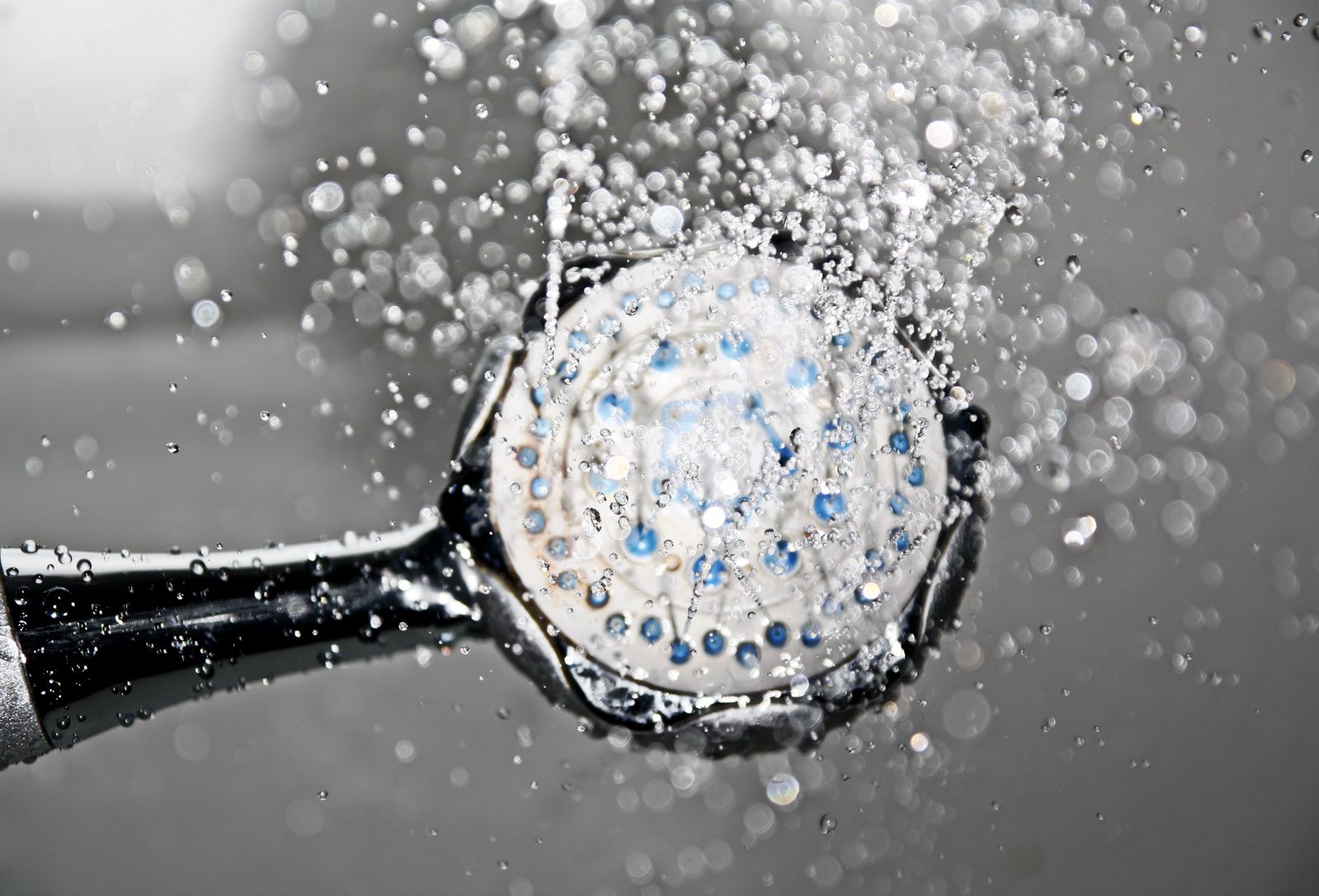
That distinction matters more than it sounds. Many municipal water systems have switched from free chlorine to chloramine (a combination of chlorine and ammonia) because it holds up longer in the distribution system. Chloramine is chemically harder to neutralize with KDF media alone. Sprite Industries, one of the longer-running shower filter brands, says as much in its own product documentation: KDF-based filters have “little effect on ‘total chlorine’ (combined chlorine), which is the form in which chlorine exists in most tap water,” and the company adds a proprietary mineral additive specifically to improve performance against combined chlorine — while still cautioning buyers “should not expect Sprite filters to remove chloramine in all applications.” If your water utility uses chloramine (check your annual water quality report), ask whether a specific model has been tested against chloramine, not just free chlorine, before assuming a “99% chlorine reduction” claim covers your water.
Do Shower Filters Remove Hardness Minerals?
No — and this is the core thing most shower filter marketing glosses over. Water hardness comes from dissolved calcium and magnesium ions, which are physically tiny and chemically stable; they don’t react with carbon or KDF media the way chlorine does, and they pass straight through a standard cartridge. WaterFilterGuru’s shower filter testing puts it plainly: “most shower head filters don’t actually soften hard water” and calcium/magnesium “mostly pass right through a standard filter cartridge.” Quality Water Lab’s independent testing of several 2026 models reached the same conclusion across the board, reporting that “none of the shower filters we have tested reduced water hardness,” regardless of what the packaging implied.
Some manufacturers get around this by making narrower claims than “removes hardness.” Culligan, for example, states directly that its WSH-C125 filtered showerhead “does not remove minerals from water, but the patented media controls scale” — meaning it may reduce how much scale sticks to surfaces without actually softening the water itself. That’s a real, useful, and honest claim. It’s a different claim from “removes hard water minerals,” and it’s worth reading the fine print on any filter that implies otherwise.
What’s the Difference Between a Shower Filter and a Water Softener?
A shower filter is a small cartridge that treats water in the last few feet of pipe, right before it leaves the showerhead. A water softener is a whole-house system, plumbed in at the point where water enters your home, that uses ion-exchange resin to physically swap calcium and magnesium ions for sodium or potassium ions — the only process that meaningfully removes hardness at scale. Softeners cost substantially more (whole-house systems commonly run into four figures installed, versus $30–$170 for a shower filter) and require periodic salt or potassium refills, but they’re the only category of product in this conversation actually built to solve hardness. If scale on your fixtures, spotty dishes, and dry-feeling hair are all bothering you, a shower filter addresses the last of those at best; a softener addresses all three.

How Long Do Shower Filter Cartridges Last — and What Do Replacements Really Cost?
Cartridge life is usually rated in gallons or months, and replacement costs vary more than most buying guides admit. We pulled current prices and rated lifespans directly from each brand’s own product pages and major retailers to build the table below. Prices are approximate, current as of publication, and change frequently — confirm the latest price with the retailer before buying.
| Filter | Rated cartridge life | Replacement cartridge cost | Estimated annual cost |
|---|---|---|---|
| AquaBliss SF100 | 3–6 months (AquaBliss’s product page) | $17.99 (AquaBliss’s site) | ~$36–$72/yr |
| AquaBliss SF220 | 3–6 months, ~10,000–12,000 gal (Walmart listing; WaterFilterGuru) | $33.95 (FiltersFast) | ~$68–$136/yr |
| Culligan WSH-C125 | ~6 months / 10,000 gal (Quality Water Lab review) | $20.49 OEM, or $8.08 aftermarket (Allfilters.com) | ~$41/yr (OEM) or ~$16/yr (aftermarket) |
| Sprite Chlorgon cartridge | ~9 months / 15,000 gal, reversible (FiltersFast) | $27.49–$32.99 (FiltersFast) | ~$37–$44/yr |
| Weddell Duo | ~5–6 months / 8,000 gal (WaterFilterGuru) | ~$25 for a twin-pack (per TapWater.org’s review) | ~$25–$50/yr |
| Jolie Filtered Showerhead | 30–90 days depending on household size (Jolie’s site) | $35–$38 per cartridge (Jolie’s site) | ~$140–$420/yr |
Does a Shower Filter Reduce Your Water Pressure?
Some, yes — filter media adds a small amount of restriction to the water path, and how much depends on the media volume and housing design. Quality Water Lab measured the Culligan WSH-C125 at 2.0 GPM out of the box. WaterFilterGuru’s testing put the Weddell Duo between roughly 1.4 and 1.7 GPM across two separate reviews, describing it as retaining the large majority of baseline pressure, while Jolie’s filtered showerhead measured around 2.2 GPM in the same roundup. As a rule of thumb, filters with more filtration media (which generally means better chlorine reduction, especially against chloramine) tend to cost you a bit more flow rate, and filters built into a full showerhead assembly with a wider spray pattern often feel less restrictive than a compact inline cartridge — even when the raw GPM numbers are similar.
How Hard Is It to Install a Shower Filter?
Every model in this guide is designed for tool-free installation in under five minutes: unscrew your existing showerhead, wrap the exposed threads with the plumber’s tape most filters include, and hand-tighten the new unit into place. Quality Water Lab describes the Culligan WSH-C125 install as “speedy and stress-free.” The most common installation dealbreaker isn’t difficulty — it’s fit. Handheld shower systems, slide bars, and body-spray panels don’t always accept a standard 1/2-inch threaded inline filter without an adapter, and a filter that also functions as the showerhead (like Jolie’s or Sprite’s fixed models) will change your spray pattern, not just your water chemistry. Check your existing shower arm and head style before ordering.
Which Shower Filters Are Actually Worth Buying in 2026?
We focused on filters that are currently sold, have a meaningful base of verified owner reviews, and are transparent (or can be made transparent through research) about what they are and aren’t certified to do. None of these remove hardness minerals — that disclaimer applies across the board.
1. AquaBliss SF100 (Vitamin C High-Output Shower Filter) — Best budget pick
AquaBliss’s SF100 is a 12-stage inline cartridge combining KDF media, activated carbon, and vitamin C, priced around $36.99 on Amazon. It has no third-party certification behind its chlorine-reduction claims, according to WaterFilterGuru’s review, which is the main knock against it. Pros: low upfront cost, widely available replacement cartridges, easy installation. Cons: no independent verification of performance claims; you’re trusting the brand’s own numbers. Best for: renters and first-time buyers with mild chlorine odor who want the cheapest way to test whether a filter changes how their shower feels.
2. AquaBliss SF220 High Output — Best for heavier chlorine odor
The SF220 uses roughly 25% more filtration media than the SF100, per WaterFilterGuru’s comparison, and runs about $47.95 at FiltersFast. Like the SF100, it carries no third-party certification. Pros: more media for stronger odor or heavier chlorine dosing; same easy install. Cons: pricier cartridges ($33.95 at FiltersFast) than the SF100’s, and still unverified by an outside lab. Best for: households in areas with a strong chlorine smell who’ve already tried a basic filter and want more capacity.
3. Culligan WSH-C125 Filtered Shower Head — Best NSF-certified value
This is a full filtered showerhead (with a built-in massage setting) rather than an inline add-on, priced around $49.95 at FiltersFast. It’s NSF/ANSI 177 certified for chlorine reduction, with Quality Water Lab’s review citing up to 99% chlorine reduction and a 2.0 GPM flow rate. Culligan is explicit that it does not remove minerals, only controls some scale adhesion. Pros: real third-party certification, cheap aftermarket cartridges ($8.08 per Allfilters.com), replaces the whole showerhead for a cleaner look. Cons: bulkier than an inline filter; the massage setting isn’t for everyone. Best for: buyers who want a verified chlorine-reduction claim without paying a premium brand price.
4. Sprite Shower Filter (Chlorgon media) — Best cartridge lifespan
Sprite’s fixed shower filters run $41 for the white finish and $66 for chrome at Pure Water Products, using a reversible Chlorgon cartridge that’s NSF/ANSI 177 certified and rated for roughly 15,000 gallons or nine months — the longest lifespan of any pick here, per FiltersFast’s listing. Replacement cartridges cost $27.49–$32.99. Pros: certified performance, longest replacement interval, lowest long-run cost per gallon of any certified option. Cons: Sprite’s own documentation cautions that its media has limited effect on chloramine (combined chlorine) without the added mineral stage, and its industrial styling isn’t for every bathroom. Best for: buyers on municipal free-chlorine water who want the lowest annual cost among certified filters.
5. Weddell Duo — Best certification stack
The Weddell Duo is a newer inline filter priced around $89.99, and per WaterFilterGuru’s review it carries both NSF/ANSI 177 (chlorine) and NSF/ANSI 53 certification, plus a lead-free materials claim. Rated life is about 8,000 gallons, or five to six months. Pros: the most independently verified certifications in this roundup; tool-free install; twin-pack replacement cartridges run about $25 per TapWater.org’s review. Cons: higher upfront price and shorter cartridge life than Sprite’s certified option. Best for: buyers who want the strongest documented certification paper trail and are willing to pay for it.
6. Jolie Filtered Showerhead — Best design, weakest independent verification
Jolie sells a design-forward metal showerhead with a built-in filter for roughly $149–$169 depending on finish and retailer (or a $139.99 annual bundle at Costco). WaterFilterGuru’s review notes Jolie’s chlorine-reduction figures (around 85%) come from in-house testing, not a third-party lab, and there’s no NSF certification on the product as of this review. Jolie’s own site recommends replacing the filter every 90 days for a household of two or fewer, or every 30 days for larger households, at $35–$38 per cartridge — the most expensive filter in this guide to run long-term. Pros: premium finish options, higher flow rate (about 2.2 GPM per WaterFilterGuru), strong brand recognition. Cons: no independent certification, by far the highest annual cartridge cost, subscription required to hit the lower per-filter price. Best for: buyers prioritizing bathroom aesthetics who are comfortable paying a premium without third-party verification.
Quick Comparison: Certification, Price, and Best Use Case
| Filter | Chlorine certification | Unit price | Flow rate | Best for |
|---|---|---|---|---|
| AquaBliss SF100 | None (brand claims only) | ~$36.99 | Not independently rated | Budget first-timers |
| AquaBliss SF220 | None (brand claims only) | ~$47.95 | Not independently rated | Heavier chlorine odor |
| Culligan WSH-C125 | NSF/ANSI 177 | ~$49.95 | 2.0 GPM | Certified performance on a budget |
| Sprite (Chlorgon) | NSF/ANSI 177 | $41–$66 | Not independently rated | Lowest long-run cost, certified |
| Weddell Duo | NSF/ANSI 177 + 53 | ~$89.99 | ~1.4–1.7 GPM | Strongest certification stack |
| Jolie Filtered Showerhead | None (in-house testing) | $149–$169 | ~2.2 GPM | Design-focused buyers |
If you’re dealing with well water rather than municipal chlorine, note that most of these filters are built and tested around chlorine/chloramine reduction, not iron, sulfur, tannins, or bacteria common in well supplies — read each manufacturer’s well-water compatibility notes before buying, and pair any shower filter with proper whole-house well treatment rather than relying on it alone.
For related bathroom upgrades, our guide to under-sink bathroom organizers for small spaces covers where to actually store extra cartridges and supplies, and if you’re building out a full plastic-light shower routine, our roundup of travel shampoo bars for a plastic-free shower routine is a natural pairing. If your hardness or contaminant concerns extend beyond the shower, our breakdown of backpacking water filters compared by flow rate and filter life explains the same cost-per-gallon math applied to portable filtration.
How We Researched This Guide
We did not physically install or test any of the filters in this article. Instead, we cross-referenced each product’s manufacturer specifications and current pricing against independent review outlets (including WaterFilterGuru and Quality Water Lab), retailer listings (FiltersFast, Allfilters.com, Walmart, Amazon), and NSF International’s own published description of the NSF/ANSI 177 certification standard, then verified which brands actually hold that certification versus which only claim similar performance in their own marketing. Where sources disagreed on a spec (like the Weddell Duo’s flow rate across two different WaterFilterGuru reviews), we reported the range rather than picking the more flattering number. Prices are approximate, current as of publication, and change frequently — confirm the latest price with the retailer before buying. Our full process is outlined on our editorial standards page.
Frequently Asked Questions
Do shower filters actually work for hard water?
They work for chlorine and, to a lesser extent, chloramine — not for hardness. Hardness comes from calcium and magnesium minerals that pass through standard filter media largely unaffected, according to both WaterFilterGuru’s and Quality Water Lab’s independent testing. If hard water scale is your main concern, only a whole-house water softener meaningfully addresses it.
What’s the difference between a shower filter and a water softener?
A shower filter is a small cartridge treating water right before it leaves the showerhead, mainly targeting chlorine and chloramine. A water softener is a whole-house ion-exchange system installed at your main water line that swaps out calcium and magnesium ions, which is the only process that actually removes hardness at scale.
Do shower filters remove chlorine and chloramine equally well?
No. Most KDF- and carbon-based media are more effective against free chlorine than combined chlorine (chloramine). Sprite Industries’ own product documentation states its Chlorgon media has “little effect” on combined chlorine without an added mineral stage. Check whether your utility uses chloramine before assuming any filter’s chlorine-reduction number applies to chloramine too.
How often should I replace my shower filter cartridge?
It depends on the model: budget cartridges like AquaBliss’s SF100 are rated for 3–6 months, NSF-certified options like Sprite’s Chlorgon cartridge can last up to nine months (about 15,000 gallons), and showerhead-integrated filters like Jolie’s need replacement every 30–90 days depending on household size, per each brand’s own guidance.
Will a shower filter noticeably reduce my water pressure?
Some pressure drop is normal since filter media adds resistance, but independent testing from WaterFilterGuru shows most current models retain the large majority of baseline flow rate — typically in the 1.4–2.2 GPM range depending on the model and filtration stage count.
Are the skin and hair benefits shower filters advertise backed by evidence?
Reducing chlorine exposure in shower water is a reasonable, plausible benefit for skin and hair, since chlorine is a known irritant for some people. However, many “glowing skin” and “healthier hair” claims on shower filter packaging come from brand marketing rather than independent clinical studies, so treat them as unverified until a specific brand cites real testing.