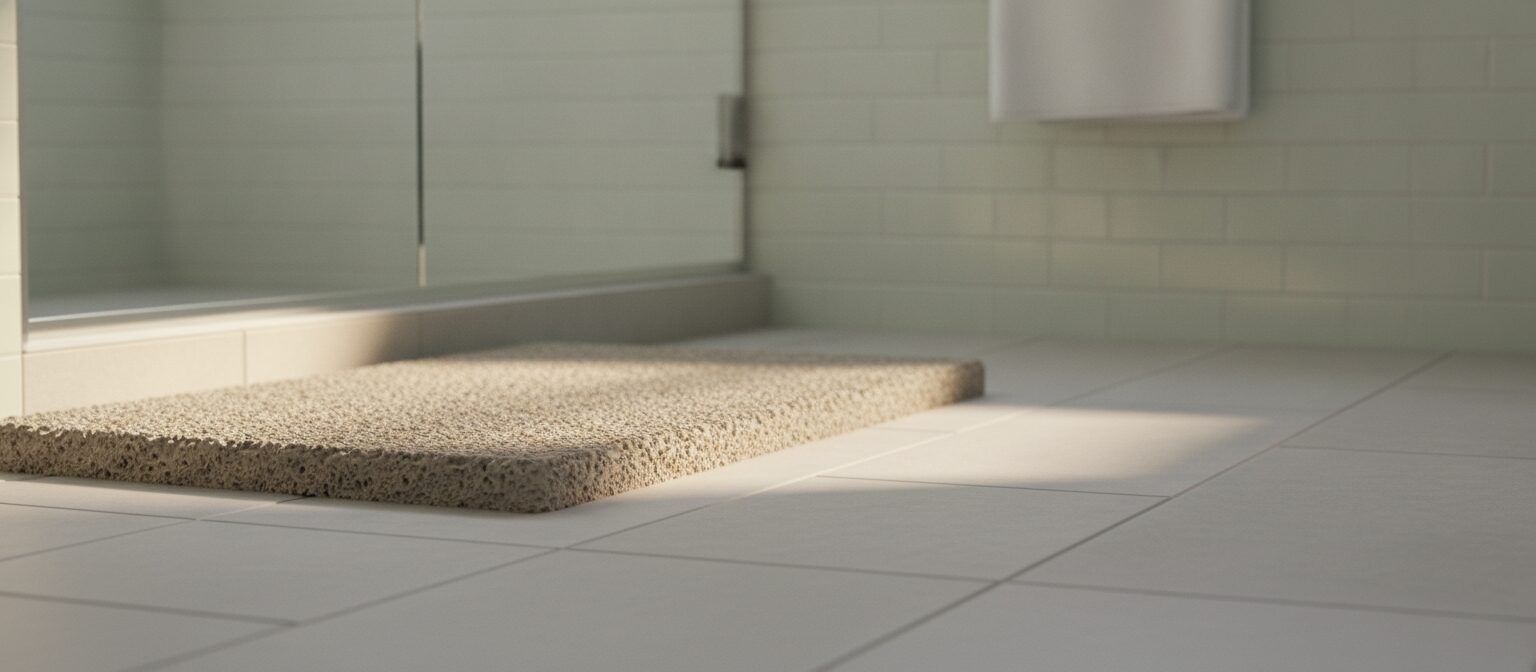
Quick-dry bath mats that actually resist mold and mildew rely on one of a handful of materials — porous diatomite stone, slatted bamboo, natural cork, or looped chenille with a breathable backing — chosen specifically so water doesn’t sit in the fibers long enough for mold to take hold. Below we compare seven real, currently sold picks across those material types on verified price, size, and manufacturer drying claims, plus an original cost-per-year table we built from that research. Our overall pick is the Dorai Home Medium Bath Stone for its near-instant surface drying, with the SlipX Solutions diatomaceous earth mat as the best budget stone option.
- Best Overall: Dorai Home Medium Bath Stone — diatomite tile, ~$115
- Best Budget Stone Mat: SlipX Solutions Quick-Dry Diatomaceous Earth Bath Mat — ~$41.49
- Best for Small Bathrooms: SpaceAid Instant Dry Diatomaceous Earth Stone Bath Mat — ~$39.98
- Best Natural Wood Drainage Mat: Bambusi Bamboo Bath Mat — ~$29.99
- Best Eco-Friendly Pick: Tiradia Natural Cork Bath Mat — ~$85
- Best Soft Fabric Mat: Gorilla Grip Chenille Bath Rug — from ~$17.99
- Best Value Multi-Piece Set: Latitude Run Aighan 3-Piece Memory Foam Bath Rug Set — ~$28.99
Table of Contents
- Why Regular Bath Mats Grow Mold (and What Stops It)
- 7 Quick-Dry, Mold-Resistant Bath Mats Worth Buying
- Original Data: Price, Size, and Cost Per Year Compared
- What to Look For When Buying a Quick-Dry Bath Mat
- Related Bathroom and Bedroom Upgrades
- How We Researched This Guide
- Frequently Asked Questions
Why Regular Bath Mats Grow Mold (and What Stops It)
A standard cotton or polyester bath mat holds water inside its pile for hours after a shower, and that trapped moisture is exactly what mold needs to establish itself. According to the U.S. Environmental Protection Agency, “if wet or damp materials or areas are dried 24-48 hours after a leak or spill happens, in most cases mold will not grow” — but a bath mat that gets stepped on wet every morning rarely gets that 24-hour dry window before it’s soaked again. The same EPA guidance recommends keeping indoor humidity below 60 percent, ideally between 30 and 50 percent, which a slow-drying mat sitting on tile actively works against.
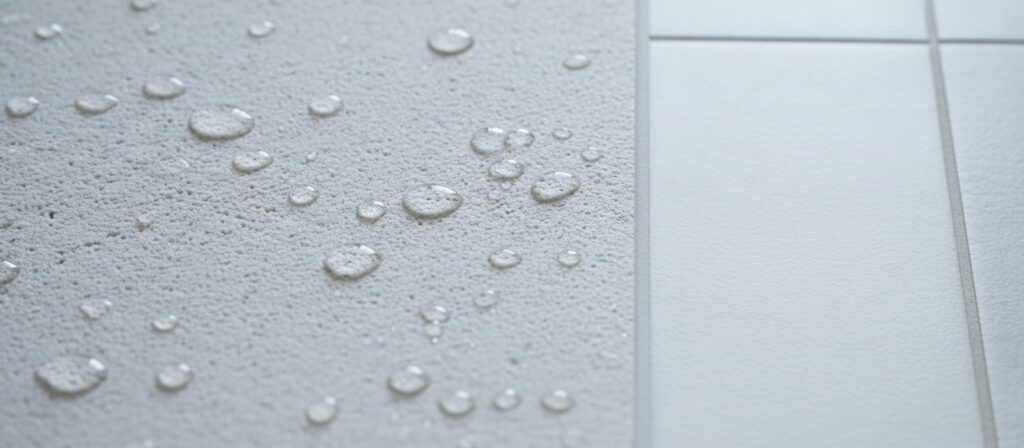
This isn’t purely a comfort issue, either. A damp bathroom floor is also a slip hazard: a CDC analysis estimated 234,094 nonfatal bathroom injuries were treated in U.S. emergency departments in a single year among people 15 and older, and falls were the leading cause at 81.1 percent of those injuries. A mat that dries fast and grips the floor addresses both problems at once — less standing water, and less time spent on a slick, saturated surface.
The materials in this guide solve the moisture problem in different ways. Diatomite stone mats are made from fossilized algae with a naturally porous structure; the material class is widely used industrially as an absorbent — the U.S. Geological Survey notes that roughly half of U.S. diatomite consumption goes into absorbent products. Bamboo and cork rely on natural water resistance plus slatted or raised surfaces that let air circulate underneath. Chenille and memory-foam mats use dense looped fibers with breathable, non-PVC backings so the whole mat can air out rather than trapping moisture against the floor.
7 Quick-Dry, Mold-Resistant Bath Mats Worth Buying
1. Dorai Home Medium Bath Stone — Best Overall
The Dorai Home Medium Bath Stone is a diatomite tile mat sold under the brand’s Diomat Stone technology, priced at about $115 for a 19-by-27-inch mat. Dorai Home describes the surface as “instant-drying,” with a porous structure that “draws in moisture on contact and encourages rapid evaporation” — the company also markets it as creating “an environment less conducive to mold, mildew, and odors” because so little water lingers on the surface.
Best for: shared bathrooms or a primary vanity spot where the mat gets stepped on constantly throughout the day.
- Pros: Largest drying surface in this lineup (40% more than the brand’s original mat, per the manufacturer); modular tile layout; rubber base pieces for grip.
- Cons: $115 is a real premium versus fabric mats; stone mats are rigid and can crack if dropped on a hard edge.
2. SlipX Solutions Quick-Dry Diatomaceous Earth Bath Mat — Best Budget Stone Mat
SlipX Solutions sells a smaller diatomaceous earth mat, 17.75 by 13.75 inches, for about $41.49 at Target. It’s built from what the listing describes as “100% Diatomaceous Earth” with a “100% Silica” backing, and the brand claims feet “dry in seconds, and the mat dries fast too.” SlipX also states the diatomaceous earth material “naturally prevents the growth of mold and bacteria.”
Best for: anyone who wants a stone mat’s drying speed without the $100-plus price of a full-size tile.
- Pros: Roughly a third of the Dorai Home mat’s price; includes a rug pad for extra grip; single-piece design, no assembly.
- Cons: Smaller footprint won’t fully cover a standard tub-exit zone; stone surface can feel cold underfoot.
3. SpaceAid Instant Dry Diatomaceous Earth Stone Bath Mat — Best for Small Bathrooms
SpaceAid’s stone mat measures 23.2 by 15 inches and sells for about $39.98. The listing says the solid diatomaceous material can “dry in just minutes,” and the mat ships with a non-slip pad underneath to keep it from sliding on tile.
Best for: narrow bathrooms or a spot in front of a pedestal sink where a full-width mat won’t fit.
- Pros: Mid-size footprint fits tighter spaces; included non-slip backing pad; competitive price versus other stone mats.
- Cons: Manufacturer doesn’t make an explicit mold-resistance claim (only fast-drying); like all stone mats, it’s not cushioned.
4. Bambusi Bamboo Bath Mat — Best Natural Wood Drainage Design
The Bambusi Bamboo Bath Mat is a 24-by-18-inch slatted wood mat, listed around $29.99. It’s made from “100% Natural Bamboo,” and Bambusi’s product page notes the “slatted top promotes drainage and airflow” while the bamboo itself “resists moisture, warping, and cracking.” Unlike the stone mats above, Bambusi doesn’t make a specific mold-resistance claim — the drainage design is the main defense against standing water.
Best for: people who want a warmer, more natural-feeling surface than stone but still want water to drain away rather than absorb into fabric.
- Pros: No fabric to hold moisture at all — water runs through the slats; doubles as a sauna or pool-deck mat; foldable for storage.
- Cons: Slats can feel firm underfoot; needs to be lifted occasionally to fully air-dry the underside.
5. Tiradia Natural Cork Bath Mat — Best Eco-Friendly Pick
Tiradia’s cork bath mat is handmade in Portugal from what the brand describes as “100% eco-friendly cork,” in a 24-by-18-inch, roughly 2-inch-thick design that weighs about a pound, priced around $85. Tiradia markets cork’s natural “antimicrobial” qualities and states the mat’s “moisture-resistant” construction “prevents mold and mildew for long-lasting freshness.”
Best for: buyers who want a softer, warmer natural material than stone and are willing to pay for it.
- Pros: Naturally antimicrobial cork; softer underfoot than stone or bamboo; doubles as an anti-fatigue kitchen mat.
- Cons: Priced closer to the premium stone mat than the budget picks; cork can show wear patterns over time.
6. Gorilla Grip Chenille Bath Rug — Best Soft Quick-Dry Fabric Mat
If stone, bamboo, and cork all sound too hard underfoot, Gorilla Grip’s Chenille Bath Rug is a fabric option built specifically to dry faster than a standard cotton mat. The 24-by-17-inch size starts around $17.99 (larger sizes up to 60-by-24 inches are available), made from dense chenille microfiber over a rubber — not PVC or hot-glue — backing. Gorilla Grip calls it “our most absorbent bath rug,” with a dense pile that “captures extra moisture” and “dries quickly,” and the mat carries OEKO-TEX Standard 100 certification for third-party-tested materials.
Best for: anyone who wants a soft, plush mat and is willing to wash it regularly rather than rely on a material that never needs washing.
- Pros: Cheapest entry point in this guide; genuinely soft underfoot; machine washable; widest size range for different bathroom layouts.
- Cons: As a fabric mat, it still needs regular washing to stay mold-free — it’s faster-drying than a generic cotton mat, not moisture-proof.
7. Latitude Run Aighan 3-Piece Memory Foam Bath Rug Set — Best Value Multi-Piece Set
For a full bathroom refresh in one purchase, Wayfair’s Latitude Run Aighan set bundles a large rug, a smaller rug, and a contour toilet mat for about $28.99. The set is made from velvet fleece over memory foam with a non-slip PVC dot backing, and Wayfair’s listing describes it as “fast-drying and mold-resistant” and machine washable.
Best for: furnishing an entire bathroom floor at once rather than buying pieces separately.
- Pros: Three coordinated pieces for one price; cushioned memory foam feel; machine washable.
- Cons: Manufacturer doesn’t publish individual mat dimensions, so it’s hard to compare footprint directly to single mats; foam-backed fabric mats generally need more frequent washing than stone, bamboo, or cork.
Original Data: Price, Size, and Cost Per Year Compared
Retailers rarely put price-per-square-inch or long-term cost side by side, so we calculated it ourselves from the verified prices and dimensions above. For the “effective annual cost” column, we assumed a realistic useful life for each material — 3 years for stone mats (rigid, doesn’t wear out but can chip or stain), 4 years for bamboo and cork (durable natural materials), and 1.5 years for fabric-backed chenille and memory-foam mats (which wear out faster from repeated washing). These are our own estimates for comparison purposes, not manufacturer-published lifespans.
| Mat | Material | Price | Size (in.) | Price per sq. in. | Assumed Useful Life | Effective Cost/Year* |
|---|---|---|---|---|---|---|
| Dorai Home Medium Bath Stone | Diatomite stone | $115.00 | 19 x 27 (513 sq in) | $0.224 | 3 years | $38.33 |
| SlipX Solutions Quick-Dry Mat | Diatomite stone | $41.49 | 17.75 x 13.75 (244 sq in) | $0.170 | 3 years | $13.83 |
| SpaceAid Instant Dry Stone Mat | Diatomite stone | $39.98 | 23.2 x 15 (348 sq in) | $0.115 | 3 years | $13.33 |
| Bambusi Bamboo Bath Mat | Bamboo (slatted) | $29.99 | 24 x 18 (432 sq in) | $0.069 | 4 years | $7.50 |
| Tiradia Natural Cork Mat | Cork | $85.00 | 24 x 18 (432 sq in) | $0.197 | 4 years | $21.25 |
| Gorilla Grip Chenille Rug | Chenille microfiber | $17.99 | 24 x 17 (408 sq in) | $0.044 | 1.5 years | $11.99 |
| Latitude Run Aighan 3-Piece Set | Velvet fleece / memory foam | $28.99 | Set of 3 (dims not published) | N/A | 1.5 years | $19.33 |
*Effective cost/year = price divided by our assumed useful life, not a manufacturer-stated figure. Actual lifespan will vary with household size, cleaning habits, and how the mat is used.
The clearest pattern: the bamboo mat has the lowest cost per square inch by a wide margin, largely because it’s a single molded material with no fabric or fill to manufacture. The premium stone and cork mats cost more per year, but neither one needs to go through a washing machine every week the way the chenille and memory-foam options do — a tradeoff worth weighing against how much laundry capacity you actually want to spend on a bath mat.
What to Look For When Buying a Quick-Dry Bath Mat
Does the material actually drain, or just claim to be “quick-dry”?
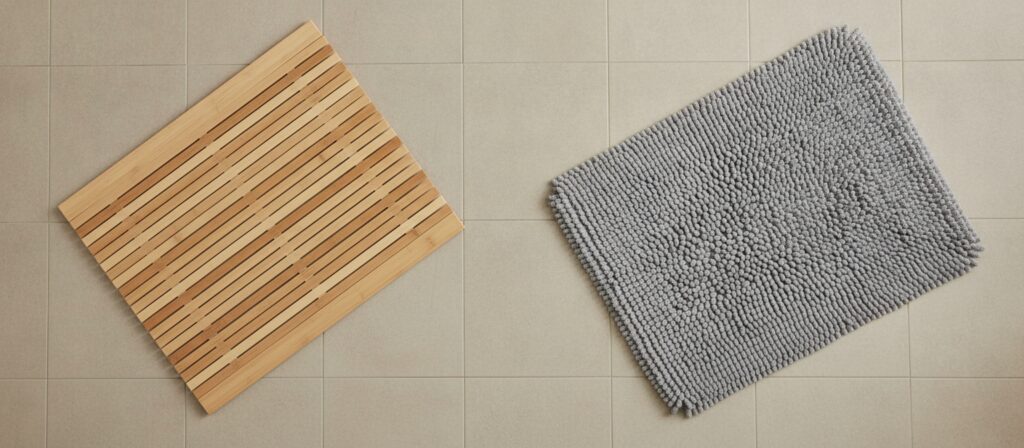
Look for a specific mechanism, not just the phrase “quick-dry” on a label. Porous stone, slatted wood, and raised-nub rubber designs all physically move water away from the surface. A fabric mat marketed as quick-dry is usually just a thinner or looser pile than a traditional shag bath mat — better than nothing, but it still needs regular washing to stay mold-free.
What backing does it have?
A rubber or TPR backing lets a fabric mat sit flat without trapping a layer of water between the mat and the floor. PVC and hot-glued backings are more prone to peeling and, in some cases, trapping moisture underneath where you can’t see it — that’s a common spot for mildew to start even on a “quick-dry” mat.
Is the surface non-slip on both a wet floor and wet feet?
Stone and bamboo mats need a rubberized base or non-slip pad underneath, since the hard material itself doesn’t grip tile. Fabric mats need enough weight or backing texture that they don’t bunch up when stepped on. Check the listing specifically for non-slip backing rather than assuming it’s included.
How big a footprint do you actually need?
Measure the space in front of your tub or shower before choosing a size. A too-small mat leaves bare, wet tile exposed right at the exit point — which defeats the purpose of buying a quick-dry mat in the first place.
Related Bathroom and Bedroom Upgrades
A bath mat is one piece of a damp-resistant bathroom. If hard water is part of what’s making your bathroom feel perpetually damp and scaled over, our guide to shower filters for hard water breaks down what a filter can and can’t fix. For the bedroom side of a humidity-conscious home, we’ve also compared cooling sheets for hot sleepers and mattress toppers sorted by the problem they solve. You can browse more picks like these in our bedding and bath category.
How We Researched This Guide
Published August 9, 2026. Updated August 9, 2026.
We did not physically test the bath mats in this guide. Instead, we built it from verified manufacturer specifications, current retailer listings, and patterns we found across owner reviews on multiple retail sites for each product — looking specifically for recurring, consistent feedback about drying speed, odor, and durability rather than a single review. Prices and dimensions were pulled directly from brand and retailer pages. Read more about how we work in our editorial standards.
Prices are approximate, current as of publication, and change frequently — confirm the latest price with the retailer before buying.
Frequently Asked Questions
What makes a bath mat resist mold and mildew?
The core factor is how fast the mat gets rid of surface water. Porous stone (diatomite), slatted wood, and raised-drainage designs move water away from the surface almost immediately, while dense fabric piles rely on wicking and evaporation, which takes longer and leaves more time for mold to establish.
How often should you wash or replace a bath mat?
Fabric mats like chenille or memory foam should generally be washed weekly to every other week in a household with daily use, since detergent and a full wash cycle are what actually kill any mold or mildew that’s started in the fibers. Stone, bamboo, and cork mats don’t go in the washer, but should be wiped down and fully air-dried periodically to prevent buildup on the surface.
Are diatomaceous earth (stone) bath mats safe and non-slip?
Most stone mats ship with a separate rubber or non-slip pad underneath, since the stone surface itself doesn’t grip tile well. Check that any stone mat you buy includes that backing, or add a non-slip pad separately — a hard mat that slides on wet tile is a slip risk regardless of how fast it dries.
Can you put a quick-dry bath mat in the washing machine?
Chenille, microfiber, and memory-foam mats with rubber or PVC-dot backings are typically machine washable — check the care label for cold water and low-heat or air-drying instructions. Diatomite stone, bamboo, and cork mats should not go in a washing machine; they’re cleaned by wiping down and air drying instead.
Do bamboo and cork bath mats really stay mold-free without washing?
Bamboo and cork are naturally more water-resistant than cotton or polyester, and neither has the dense, water-holding pile that traditional fabric mats do, which is why manufacturers can make quick-dry and, in cork’s case, antimicrobial claims. They still need to be lifted and dried underneath periodically, since moisture can collect between the mat and the floor.
What size bath mat should you buy?
Measure the floor space directly in front of your tub or shower exit first. A mat that’s too small leaves wet tile exposed right where you step out, which is both a slip hazard and a spot where standing water can sit longest. Most of the mats in this guide fall in the 17-to-27-inch-wide range, which covers a typical single-person exit zone; look at multi-piece sets if you need to cover a wider area.