Some links on our site may earn us a commission at no extra cost to you. Learn more.
This article is for general information only and is not medical advice. If you have a skin condition, hemorrhoids, or post-surgical concerns, talk to your doctor about what is right for you.
Published August 10, 2026 · Updated August 2026
The best bidet attachments in 2026 cost $40 to $129, install on a standard toilet in under half an hour, and need no electricity — just the water line your toilet already has. What most roundups skip is the arithmetic that makes them an easy purchase: every one of the five picks below can cover its own price in reduced toilet-paper spending inside a year, and the cheapest do it in about four months. We ran that payback math for each pick, using publicly documented prices and consumption figures, so you can judge these as household economics rather than a novelty upgrade.
This guide sits alongside the rest of our bathroom coverage — our look at whether shower filters for hard water really work, our under-sink bathroom organizer picks for small spaces, and more in our Bedding & Bath section.
Which Bidet Attachment Is Best in 2026? The Short Answer
The LUXE Bidet NEO 185 is the best bidet attachment for most bathrooms in 2026. At $49.99 on LUXE’s own site, it pairs dual self-cleaning nozzles — a rear wash plus a gentler feminine-wash spray — with two simple mechanical control knobs and an 18-month warranty, and by our payback math it recovers its full price in toilet-paper savings in roughly five months for a two-person household. The TUSHY Classic 3.0 ($129) is the pick if fit, finish, and the most polished install experience matter more than price, and the LUXE Bidet NEO 320 Plus ($65.99) is the one to buy if cold water is a dealbreaker.
The five picks, in one look
| Best for | Pick | Price | Pays for itself in* |
|---|---|---|---|
| Best overall | LUXE Bidet NEO 185 | $49.99 | ~5 months |
| Best fit and finish, easiest install | TUSHY Classic 3.0 | $129 | ~12 months |
| Best warm-water option | LUXE Bidet NEO 320 Plus | $65.99 | ~6 months |
| Best under $40 | Bio Bidet SlimEdge | ~$40 | ~4 months |
| Slimmest profile (travel bidet included) | GenieBidet Ellegantz | $46.99 | ~4.5 months |
*Months of toilet-paper savings needed to cover the purchase price, for a two-person household cutting paper use by half — full assumptions in the table below.
The Payback Table: How Many Months Until a Bidet Attachment Pays for Itself?
A bidet attachment pays for itself in 4 to 12 months for a typical two-person household, depending on which model you buy. Here is the arithmetic behind that claim. Per Zipdo’s 2026 toilet-paper statistics roundup, U.S. per-capita consumption runs about 100 rolls a year and a 12-roll pack averages $15 — roughly $1.25 a roll. That puts a two-person household’s paper spending near $250 a year. TUSHY, a bidet maker, claims its attachments cut toilet-paper use by up to 80%; we ran the numbers at a more conservative 50% reduction (about $125 saved a year, or $10.42 a month) and again at the manufacturer’s 80% figure.
| Attachment | Price | Payback at 50% less paper | Payback at 80% less paper |
|---|---|---|---|
| Bio Bidet SlimEdge | ~$40 | 3.8 months | 2.4 months |
| GenieBidet Ellegantz | $46.99 | 4.5 months | 2.8 months |
| LUXE Bidet NEO 185 | $49.99 | 4.8 months | 3.0 months |
| LUXE Bidet NEO 320 Plus | $65.99 | 6.3 months | 4.0 months |
| TUSHY Classic 3.0 | $129 | 12.4 months | 7.7 months |
The payback column is our own calculation — price divided by monthly savings under each scenario — and it reframes the whole category. Even the most expensive pick here breaks even inside 13 months under the conservative assumption, and every sub-$50 model does it in under 5. After that, the savings are recurring: the same two-person household keeps roughly $125 to $200 a year, every year the attachment stays on the toilet.
LUXE Bidet NEO 185 — Best Overall
The LUXE Bidet NEO 185 wins this comparison because it delivers the two features that matter most — dual nozzles and self-cleaning — at a $49.99 price that pays itself off in under five months. The second nozzle is the real differentiator at this price: it sprays at a softer, more forward angle for a feminine wash, per LUXE’s product documentation, so two kinds of users get a purpose-built stream instead of one compromise nozzle. Target’s listing backs the NEO 185 with an 18-month warranty, six months longer than the coverage on the $129 TUSHY Classic 3.0.
Controls are two mechanical knobs — one selects the wash mode, one sets pressure — and a self-cleaning mode rinses the nozzles behind their guard after use. The honest limits: it sprays cold water only, the plastic control arm looks utilitarian next to the TUSHY’s finished dial, and Reviewed’s testing of the related NEO 120 noted that LUXE’s single-nozzle spray targeting can feel imprecise, which is exactly why the dual-nozzle 185 is the model worth buying.
- Pros: dual self-cleaning nozzles at $49.99; 18-month warranty is the longest here; simple two-knob control
- Cons: cold water only; utilitarian looks; nozzle guard needs an occasional manual wipe-down
TUSHY Classic 3.0 — Best Fit and Finish, Easiest Install
The TUSHY Classic 3.0 is the bidet attachment to buy if you want the category’s most refined hardware and the smoothest setup. Forbes Vetted named it the best bidet for easy installation in its 2026 roundup, with its tester reporting the install “took under 20 minutes,” and TUSHY’s own listing prices it at $129 with a 1-year limited warranty and 30-day returns. Its patented SmartSpray self-cleaning nozzle rinses before and after each use and retracts automatically when the unit is off.
The Classic 3.0 also has the most precise aim of the group: a dedicated nozzle adjuster tilts the spray angle to target where you want it, a control most sub-$50 attachments skip entirely. The trade-off is pure math — at $129 it costs more than two and a half NEO 185s, its warranty is shorter than LUXE’s, and it still sprays cold water only. You are paying roughly $80 extra for design, angle control, and color options, not for extra washing capability.
- Pros: adjustable spray angle; self-cleaning, auto-retracting nozzle; documented sub-20-minute install; multiple finishes
- Cons: $129 is the group’s slowest payback at over a year; 1-year warranty trails the $49.99 LUXE; single nozzle
LUXE Bidet NEO 320 Plus — Best Warm-Water Option
The LUXE Bidet NEO 320 Plus is the pick for anyone who has ruled out a bidet because of cold water. At $65.99 in Reviewed’s 2026 testing — where it earned the publication’s best-attachment nod — it connects to both the toilet’s cold line and the bathroom sink’s hot-water line, mixing the two with a temperature dial no non-electric attachment under $50 offers. It keeps the dual front-and-rear nozzles and adds a 360-degree self-cleaning function and a splash guard.
Two honest caveats before you buy. First, the hot-water hookup means running a second hose from under your sink, so installation is closer to 45 minutes than 20, and the sink needs to sit near the toilet. Second, reviewers are split on this model: Reviewed made it their top attachment while Forbes Vetted preferred other picks, noting its controls “can be hard to see” from a seated position. If warm water is not a priority, the $49.99 NEO 185 is the simpler buy.
- Pros: genuine warm-water mixing without electricity; dual nozzles with 360° self-clean; $65.99 keeps payback near 6 months
- Cons: needs a hot-water line within hose reach; longer install; controls sit low and can be awkward to read
Bio Bidet SlimEdge — Best Under $40
The Bio Bidet SlimEdge is the cheapest way into a dual-nozzle bidet that we would still recommend. Forbes Vetted named it the best value bidet attachment in its 2026 roundup at under $40, with separate rear and feminine-wash nozzles, adjustable pressure, a 1-year warranty, and compatibility with both round and elongated bowls. By our payback math it is the fastest self-funding pick here: about 3.8 months at a 50% paper reduction, and under 3 months at TUSHY’s claimed 80%.
The corner Bio Bidet cut to hit the price is worth knowing: the SlimEdge has no self-cleaning nozzle function, per Forbes Vetted’s spec rundown, so keeping the retracting nozzles fresh means an occasional manual wipe with a cloth and mild cleaner. For a guest bathroom, a first bidet, or a household that mostly wants to test the concept before committing, that is a fair trade. For a heavily used primary bathroom, the NEO 185’s self-cleaning mode justifies the extra $10.
- Pros: dual nozzles at a sub-$40 price; fastest payback in this guide; fits round and elongated bowls
- Cons: no self-cleaning function; cold water only; basic hardware feel
GenieBidet Ellegantz — Slimmest Profile, Travel Bidet Included
The GenieBidet Ellegantz earns its slot for bathrooms where the standard complaint applies: most attachments raise the back of the toilet seat and leave it sitting slightly tilted. At $46.99 in Reviewed’s 2026 testing, the Ellegantz uses a deliberately slim body to minimize that seat gap, runs everything from a single control knob, includes a self-cleaning function, and — unusually at any price — ships with a portable travel bidet bottle in the box.
Reviewed’s testers praised the lightweight engineering but found the single-knob control finicky: one dial handles on, off, and pressure, so the line between gentle and firm arrives quickly, and its pressure runs high out of the box. If you want granular control, the two-knob LUXE models are easier to live with. If a flush-sitting seat and a packable travel option matter — regular travelers, small bathrooms, shared apartments — nothing else in this price range bundles both.
- Pros: slimmest body here, so the seat sits nearly flat; travel bidet included; self-cleaning at $46.99
- Cons: single knob makes fine pressure control fiddly; spray runs strong by default; cold water only
Is a Bidet Attachment Worth It?
A bidet attachment is worth it for most households because the cost is one-time and small — $40 to $129 — while the toilet-paper savings recur every year, covering the purchase price in 4 to 12 months by our math above. Unlike electric bidet seats, which run $200 to $600 and need an outlet by the toilet, attachments use only water pressure, so there is nothing to plug in and nothing to break electronically.
There is a comfort-and-care case alongside the financial one. Dr. Evan Goldstein, DO, founder and CEO of Bespoke Surgical, told Forbes Vetted that “bidets are great for anyone dealing with irritation, hemorrhoids or healing tissue,” and that staying dry afterward “helps prevent dermatitis and fungal infections.” As with anything health-adjacent, those are reasons to ask your own doctor — not promises any $50 gadget can make. The people least served by an attachment: households whose toilets sit far from the water shutoff, and anyone set on heated seats and air drying, which only electric seats provide.
Do You Still Need Toilet Paper With a Bidet?
Yes — most bidet users still keep toilet paper for drying, but they use dramatically less of it, since paper’s job shrinks from cleaning to patting dry. That is why the realistic savings figure is a reduction, not elimination: TUSHY’s own marketing claims up to 80% less paper, while our payback table above deliberately assumes 50% to keep the math conservative.
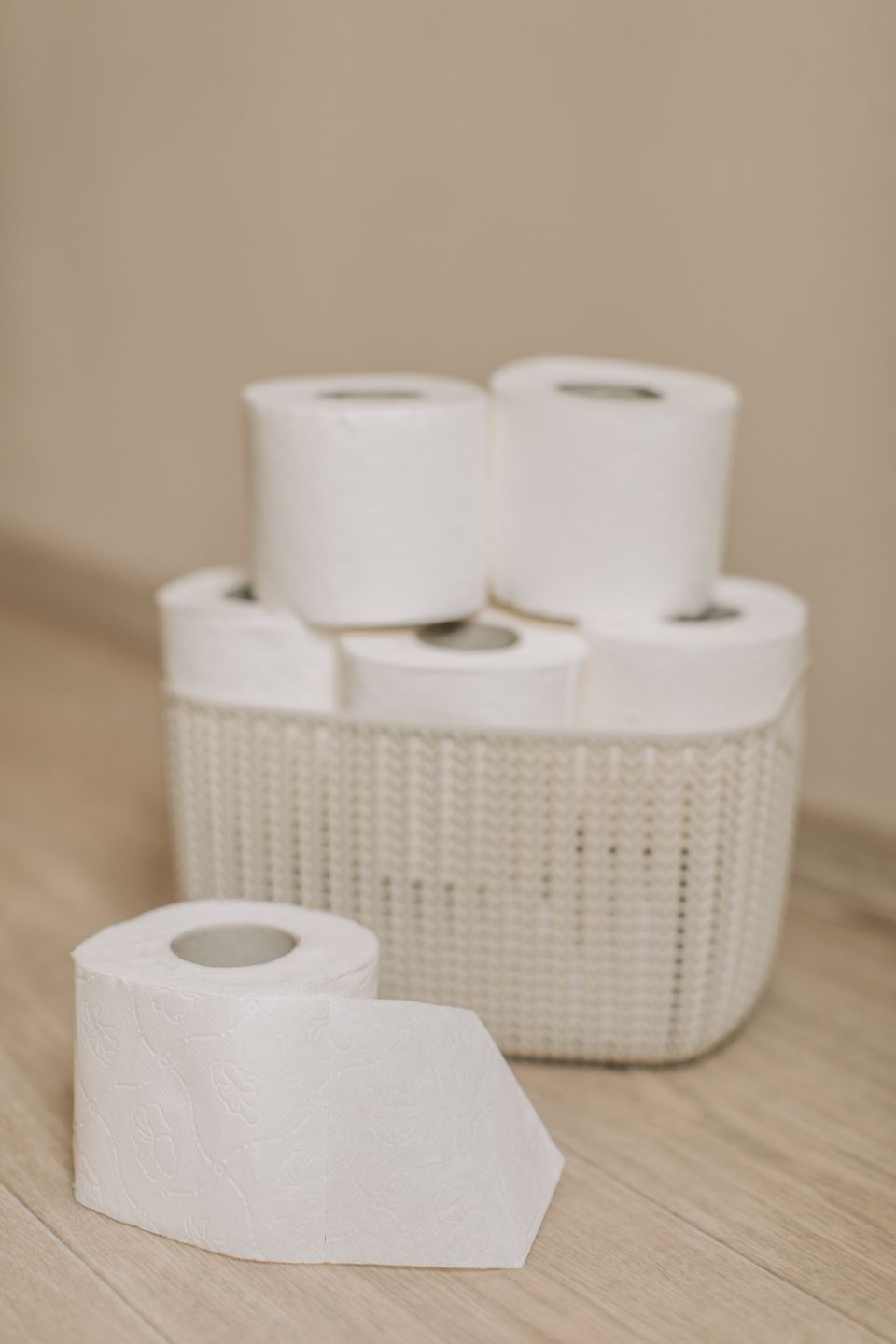
Some households swap drying paper for a small stack of dedicated cloth towels, which pushes paper use toward zero, but that is a lifestyle choice rather than a requirement. Budget one roll where you previously used two and the numbers in our payback table will track closely with real life.
Is Cold Water From a Bidet Attachment Uncomfortable?
Cold bidet water is briefly bracing but not painful for most people, because the spray lasts seconds and the water sitting in your home’s pipes is usually room-temperature-adjacent rather than truly cold. Four of the five picks in this guide — the LUXE Bidet NEO 185, TUSHY Classic 3.0, Bio Bidet SlimEdge, and GenieBidet Ellegantz — spray unheated line water only.
Climate and plumbing decide how much this matters. In warm regions, “cold” line water in summer can be genuinely tepid; in a northern winter, it will make you flinch for the first second. If that sounds like a dealbreaker, the LUXE Bidet NEO 320 Plus solves it for $65.99 by borrowing hot water from the sink line — the only pick here with a real temperature dial — while electric seats solve it more elegantly at three to five times the price.
How Hard Is It to Install a Bidet Attachment?
Installing a bidet attachment is a 20-to-45-minute job that needs no plumber: you remove the toilet seat, sit the attachment’s plate on the bowl, re-mount the seat through the plate’s slots, and split the toilet’s water supply line with the included T-valve. Michelle Cary, a licensed plumber and co-owner of M. Cary and Daughters Plumbing, told Forbes Vetted that “most bidets can be installed with a pair of channel locks and a screwdriver.”
Three practical tips from the documented installs behind this guide. Shut the water off at the wall valve and flush before disconnecting anything. Hand-tighten the plastic T-valve first — over-torquing plastic threads with a wrench is the most common way to crack a fitting. And expect the cold-only models to be the fast installs: Forbes Vetted’s TUSHY Classic 3.0 install ran under 20 minutes, while the NEO 320 Plus’s extra hot-water line adds another 20 or so. Renters are fine here too — everything reverses with the same two tools, as covered in the FAQ below.
How We Researched
We did not hands-on test these bidet attachments. This guide is built from manufacturer documentation and named independent reviews published or updated for 2026: TUSHY’s and LUXE Bidet’s own product listings, Forbes Vetted’s 2026 bidet roundup (including its named expert sources, plumber Michelle Cary and Dr. Evan Goldstein), Reviewed’s 2026 bidet testing, Nest Alpha’s TUSHY-versus-LUXE comparison, Target’s retail listing for warranty terms, and Zipdo’s toilet-paper consumption statistics — cross-checked against long-term owner feedback patterns for each model. The payback table is our own calculation: purchase price divided by estimated monthly toilet-paper savings under two stated scenarios. Where a spec differed between sources, we cited the source we used in the sentence. Read more about how we work on our editorial standards page.
Prices are approximate, current as of publication, and change frequently — confirm the latest price with the retailer before buying.
Bidet Attachment Questions, Answered
Do bidet attachments fit every toilet?
Bidet attachments fit the vast majority of standard two-piece toilets, and models like the Bio Bidet SlimEdge explicitly support both round and elongated bowls. The exceptions are one-piece toilets with sharply sloped or “French curve” tanks and fully skirted designs, where the mounting plate or hoses may not seat cleanly — measure and check the maker’s fit guide first.
Are bidet attachments sanitary?
Bidet attachments are sanitary when the nozzles stay clean: four of our five picks have a self-cleaning mode that rinses the nozzles behind a guard before or after each use, and the TUSHY Classic 3.0’s nozzle also retracts automatically when off. The spray comes from your home’s fresh supply line, never from tank or bowl water.
Can renters install a bidet attachment?
Renters can install a bidet attachment because nothing about the job is permanent: the unit bolts under the existing seat and tees into the supply line without cutting, gluing, or altering any plumbing. Moving out means reversing the same 20-minute install with a screwdriver and adjustable pliers, reconnecting the original hose, and taking the attachment to the next apartment.
How do you clean and maintain a bidet attachment?
Maintaining a bidet attachment takes a few minutes a month: run the self-clean mode if your model has one, wipe the nozzles and guard with a soft cloth and mild cleaner, and check the T-valve connection for seepage. Models without a self-clean function, like the Bio Bidet SlimEdge, just need that manual nozzle wipe a little more often.